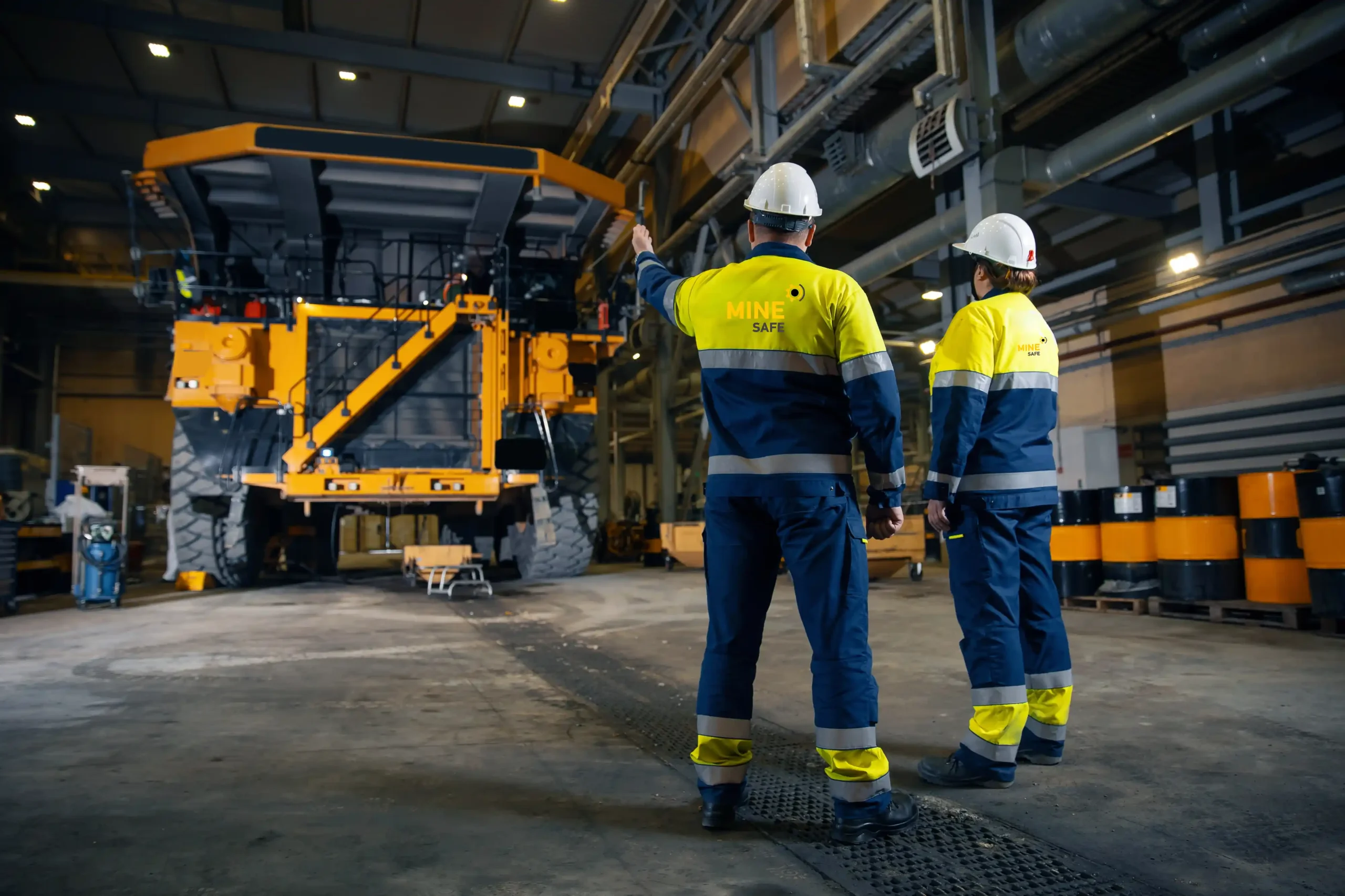


The difference between Level 8 and Level 9 collision prevention isn’t just technical—it’s the difference between warning operators about imminent collisions and preventing those collisions from happening regardless of operator response.
| Capability | Level 8 (Advisory) | Level 9 (Intervention) | Impact |
|---|---|---|---|
| Detection | ✅ Detects collision risk | ✅ Detects collision risk | Equivalent |
| Operator Alerting | ✅ Audible/visual warnings | ✅ Audible/visual warnings | Equivalent |
| Machine Intervention | ⚠️ Prepares systems only (engine de-rate) | ✅ Actively applies braking & throttle control | Level 9 prevents collision |
| Collision Prevention Method | ⚠️ Depends on operator response | ✅ Operates independently of operator | Level 9 succeeds when operator fails |
| Fatigue-Related Collision Prevention | ❌ Fatigued operators may not respond | ✅ Prevents collision regardless of fatigue | Level 9 prevents 40-50% more collisions |
| Distracted Operator Performance | ❌ Distracted operators may miss warnings | ✅ Prevents collision even if operator doesn’t respond | Level 9 succeeds in all scenarios |
| Reaction Time Dependency | ⚠️ Collision prevented only if operator reacts in time | ✅ No operator reaction required—system acts | Level 9 eliminates reaction time risk |
| Speed Restriction Capability | ✅ Engine de-rate slows acceleration | ✅ Controlled braking + throttle control | Level 9 provides more aggressive intervention |
| Emergency Intervention | ⚠️ Relies on operator to brake | ✅ System applies emergency braking | Level 9 more reliable in emergencies |
| Collision Reduction Rate | 📊 50-70% reduction (operator-dependent) | 📊 85%+ reduction (system-guaranteed) | Level 9: 15-35% better performance |
| Regulatory Compliance | ⚠️ Meets basic standards | ✅ Exceeds safety benchmarks | Level 9 is emerging mandatory standard |
| Cost | 💰 Lower system cost | 💰💰 Higher system cost | Level 9 ROI: 18-36 months |
Why Level 9 Prevents Collisions Level 8 Cannot
🔴 Fatigue-Related Collisions
Level 8 Problem: Fatigued operator receives warning but reaction time is 2-3 seconds slower than alert operator. By the time fatigued operator reacts, collision may already be unavoidable.
Level 9 Solution: System intervenes automatically within milliseconds, preventing collision regardless of operator fatigue level. Fatigue monitoring integration enables proactive detection of drowsy operators with automatic operation restrictions in high-risk areas.
🔴 Distracted Operator Collisions
Level 8 Problem: Operator focused on in-cabin task (communication, maintenance log) misses collision warning entirely. Vehicle continues toward collision hazard.
Level 9 Solution: System applies automatic intervention regardless of operator awareness. Collision prevented even if operator is completely distracted.
🔴 Delayed Response Collisions
Level 8 Problem: Operator hears warning but hesitates before responding (confusion, uncertainty, processing delay). Hesitation delay allows collision to occur despite warning.
Level 9 Solution: No operator response required. System takes control and applies braking/throttle control within milliseconds of detecting collision risk. Hesitation eliminates no collision risk.
🔴 Equipment Failure Cascade Collisions
Level 8 Problem: Operator’s braking system fails—warning alone cannot prevent collision. Operator must rely on backup systems or manual override.
Level 9 Solution: System maintains independent braking pathway separate from operator controls. Equipment failure doesn’t disable Level 9 intervention capability.
When to Choose Level 8 vs Level 9
✓ Choose Level 8 If:
- Your operation has experienced drivers with strong safety culture
- You prioritize cost reduction over maximum safety
- Your equipment has reliable operator braking systems
- Your operation is in development/pilot phase
- You plan to upgrade to Level 9 in future
Note: Level 8 provides measurable safety improvement, but leaves residual collision risk from operator-dependent failures.
✓ Choose Level 9 If:
- You operate in high-traffic areas with frequent close-proximity scenarios
- You employ diverse driver populations with varying experience levels
- You operate extended shifts (driver fatigue is factor)
- You require maximum regulatory compliance and safety excellence
- You prioritize zero-collision outcomes over implementation cost
- You want to future-proof against autonomous vehicle integration
Mine Safe Global Advantage: Level 9 ROI achieved within 18-36 months through incident prevention + downtime reduction.
Real-World Performance Comparison
Collision Reduction Performance
Level 8 Systems: Average 50-70% collision reduction across deployments
Level 9 Systems: Average 85%+ collision reduction (Mine Safe Global: 85-95%)
📊 Insight: Level 9 prevents 15-45% additional collisions Level 8 cannot address
Fatigue-Related Collision Prevention
Level 8: No specific fatigue prevention capability
Level 9 + Fatigue Monitoring: 40-50% of all mining collisions involve fatigue—Level 9 prevents these
📊 Insight: Integrated fatigue + Level 9 approach prevents collisions standalone CAS cannot address
Operator Response Success Rate
Level 8: Depends on operator alertness and reaction time (typically 60-75% successful prevention)
Level 9: Independent of operator response (near-100% prevention when system functioning)
📊 Insight: Level 9 eliminates operator-dependency failure modes
Ready to Implement Level 9?
Mine Safe Global’s Level 9 collision prevention system delivers 85%+ collision reduction with proven deployment across 50+ mining operations globally. Whether you’re upgrading from Level 8 or implementing Level 9 for the first time, our complete implementation support ensures seamless deployment and maximum safety outcomes.
📞 Contact Mine Safe Global:
Phone: +27 87 711 2080
Email: info@minesafeglobal.com