
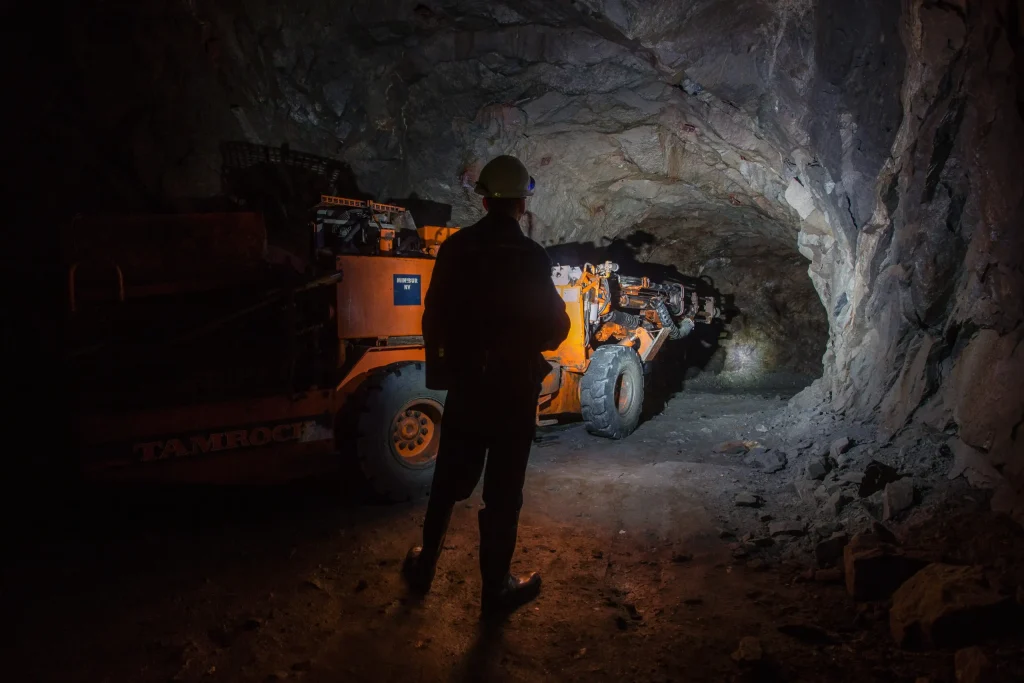
Underground mining is the most hazardous environment in the industry. Narrow tunnels, total darkness, heavy dust, constant noise, and heavy trackless machinery sharing roadways with people on foot create a concentration of risk found nowhere else on a mine. Underground mining safety technology is the connected set of digital systems, proximity sensors, and real-time tracking tools engineered to protect workers in exactly these dark, confined, and dusty conditions — detecting what people cannot see and acting faster than a person can react.
This guide explains how modern underground mining safety technology works, the core systems every underground operation should understand, the global standards that govern them, and how Mine Safe Global’s underground collision avoidance systems (CAS) deliver Level 9 protection to mining operations worldwide.
What Is Underground Mining Safety Technology?
Underground mining safety technology refers to the engineered systems — hardware and software — that detect hazards, warn people, and intervene automatically to prevent injuries and fatalities below ground. Because satellite positioning (GPS/GNSS) cannot penetrate solid rock, underground safety technology relies on proximity detection between machine-mounted systems and wearable personnel tags, rather than on line of sight, light, or camera visibility.
The most effective underground safety technology is layered. No single device solves every risk, so modern systems combine machine awareness, escalating operator warnings, automated machine intervention, personnel tracking, and human-factors monitoring into one integrated solution that follows people and machines through every level and section of the mine.
Why Underground Mines Need Specialised Safety Technology
Surface mining safety technology cannot simply be transplanted underground. The underground environment concentrates every collision and hazard factor into one confined space:
- No GPS coverage. Rock blocks satellite signals, so positioning-based systems used on surface do not work below ground.
- Total darkness and dust. Human vision and camera-based detection both degrade in exactly the conditions where underground collisions happen.
- Blind intersections and narrow roadways. Machines and pedestrians meet at corners neither can see around.
- Noise. Engine and ventilation noise masks the sound of an approaching load-haul-dump (LHD) or truck.
- Operator fatigue. Long shifts in hot, monotonous conditions produce drowsiness and distraction — a leading human factor behind underground vehicle incidents.
Traditional controls such as lights, hooters, and traffic-management rules reduce risk but cannot eliminate it, because they all depend on a person seeing, hearing, or reacting to danger in time. Underground mining safety technology closes that gap.
Core Categories of Underground Mining Safety Technology
Underground safety technology falls into several complementary categories. The table below summarises what each does and the risk it addresses.
| Technology Category | What It Does | Primary Risk Addressed |
|---|---|---|
| Proximity Detection & Collision Avoidance (CAS/PDS) | Detects people, machines, and restricted zones around a vehicle and warns or intervenes. | Vehicle–pedestrian and vehicle–vehicle collisions. |
| Level 9 Automated Intervention | Slows or stops a machine directly when a collision is imminent, without waiting for the operator. | Collisions where the operator cannot see or react in time. |
| Personnel Tracking & Locating | Keeps every worker detectable and locatable underground via RF tracking. | Missing persons, emergency response, and evacuation. |
| Fatigue & Human-Factors Monitoring | Detects operator drowsiness and distraction in real time using in-cab sensors. | Incidents caused by impaired or inattentive operators. |
| Live Tracking & Reporting Platforms | Aggregates violations and events for analysis and proactive safety management. | Recurring, unmanaged, or unreported risk trends. |
| Environmental & Thermal Monitoring | Monitors temperature and other environmental hazards in real time. | Thermal and atmospheric hazards. |
1. Proximity Detection and Collision Avoidance Systems (CAS)
Collision avoidance systems (CAS), also called proximity detection systems (PDS), are the cornerstone of underground mining safety technology. They give each protected machine 360-degree awareness of tagged people and hazards around it — through dust, darkness, and blind intersections — and escalate warnings as distance closes. Detection does not rely on line of sight, which is what makes it effective where cameras and human vision fail.
Mine Safe Global’s HaloGuard Underground Collision Prevention System delivers this 360-degree machine awareness, engineered specifically for confined underground spaces.
2. Level 9 Automated Machine Intervention
Warnings alone are not always enough. Level 9 is the highest standard of collision prevention defined by the EMESRT (Earth Moving Equipment Safety Round Table) framework: when an imminent collision risk is detected, the system intervenes on the machine directly — slowing or stopping it — whether or not the operator responds. Mine Safe Global’s Level 9 Collision Avoidance System brings this fully automated intervention to underground trackless mobile machinery and is ISO 21815 compliant.
3. Personnel Tracking and Locating Technology
Keeping every worker detectable and locatable is essential both for collision avoidance and for emergency response. Mine Safe Global’s HaloTag Personnel Safety Device integrates a wearable tag into the cap lamp workers already carry, so every protected machine recognises nearby personnel with no extra device to carry and no line of sight required. In an emergency, the same tag helps response teams establish where personnel are underground — turning a search into a directed response.
4. Fatigue and Human-Factors Monitoring
A large share of vehicle incidents begin with a drowsy or distracted operator. The Advanced Fatigue Monitoring System uses an in-cab sensor and camera to detect eye closure and distraction in real time, alerting the operator with audible warnings and seat vibration. Night-vision capability makes it fully effective in dark underground conditions, addressing the human factors that collision detection alone cannot.
5. Live Tracking, Reporting, and Compliance Platforms
Data closes the loop. Live reporting platforms such as TrackPro aggregate violations and safety events for analysis, moving operations from reactive incident response to proactive safety management. For surface personnel-location compliance, the Missing Person Locator System supports rapid location of personnel.
How Underground Collision Avoidance Technology Works
The most advanced underground mining safety technology follows a three-stage sequence: detect, warn, intervene.
- Detection. HaloGuard gives each protected machine 360-degree awareness of tagged people and hazards, through dust, darkness, and blind corners. Every worker is visible through the HaloTag integrated into their cap lamp.
- Warning. As a worker or hazard enters a machine’s warning zone, the operator is alerted — giving both sides time to react before the situation becomes critical.
- Level 9 intervention. If an imminent collision risk is detected, the system does not wait for a human response. It slows or stops the machine directly, even when the operator cannot see the danger.
Surface vs Underground Mining Safety Technology
Surface and underground safety technology share the same intervention standard but rely on different detection methods. The table below sets out the key differences.
| Factor | Surface Mining | Underground Mining |
|---|---|---|
| Positioning | Proximity detection combined with GNSS/GPS in open-sky conditions. | Proximity detection only — GPS cannot penetrate rock. |
| Environment | Open, generally better visibility. | Confined, dark, dusty, high-noise, blind intersections. |
| Detection method | Line-of-sight-tolerant; camera and GNSS layers viable. | Non-line-of-sight RF proximity; cameras degrade in dust and dark. |
| Intervention standard | Level 9 automated intervention. | Level 9 automated intervention (same standard, underground-engineered). |
| Personnel devices | Wearable tags / vehicle tags. | Cap-lamp-integrated HaloTag — no extra device to carry. |
Mine Safe Global provides both, so mixed operations can run one protection standard across the whole mine.
Global Standards and Compliance for Underground Safety Technology
Underground mining safety technology is governed by a set of international and national standards. Understanding them helps operations specify systems that are both effective and audit-ready.
| Standard / Framework | Relevance to Underground Safety Technology |
|---|---|
| ISO 21815 | Global standard for collision-warning and functional protocols enabling CAS (CxD) and machine-control-interface (MCI) integration. |
| EMESRT (Level 7/8/9) | Defines the control hierarchy for machine safety; Level 9 is the highest, requiring automated machine intervention. |
| MHSA (Act 29 of 1996) | South African Mine Health and Safety Act — requires mines to manage trackless mobile machinery collision risk, including automated means where warnings alone are insufficient. |
| MOSH CPS Blueprint | Mining Industry Occupational Safety and Health standards for the design and implementation of collision prevention systems. |
| IP66 / EMI & EMC | Hardware durability against dust and water ingress, plus electromagnetic interference and compatibility standards. |
Mine Safe Global’s underground solutions are engineered to meet these standards. For a full breakdown, see the Certifications & Compliance resource.
Choosing the Right Underground Mining Safety Technology
The right combination depends on your sections, fleet, and interaction risks. As a starting framework:
- Machine awareness — deploy HaloGuard on trackless mobile machinery that shares roadways with people: LHDs, underground trucks, drill rigs, bolters, personnel carriers, and utility vehicles.
- Automated intervention — add Level 9 where warnings alone are not sufficient and compliance requires automated means.
- Personnel protection — equip workers with the cap-lamp-integrated HaloTag so they are detectable and locatable.
- Human factors — fit fatigue monitoring in cabs to catch drowsiness and distraction before they cause incidents.
A section-by-section risk assessment determines deployment priority. Mine Safe Global specialists will assess your operation and recommend the right underground protection at no cost.
The Future of Underground Mining Safety Technology
Underground safety technology continues to move toward deeper integration: connected digital systems that combine collision avoidance, personnel tracking, fatigue monitoring, and reporting on a single platform; OEM-level machine integration so intervention is native rather than bolted on; and data-driven safety management that predicts risk trends before they become incidents. The direction of travel is clear — from reactive controls toward continuous, automated, near-zero-incident protection.
Protect Your Underground Operation
Mine Safe Global is South Africa’s leading underground collision prevention specialist, serving mining operations worldwide across Southern Africa, North America, the United Kingdom, and Europe. To see underground mining safety technology in action, contact our sales team or request a demonstration.
Frequently Asked Questions
What is underground mining safety technology?
Underground mining safety technology is the set of connected digital systems, proximity sensors, and real-time tracking tools that detect hazards, warn workers, and intervene automatically to prevent injuries and fatalities in the dark, confined, dusty conditions of an underground mine. It typically combines collision avoidance, personnel tracking, and fatigue monitoring into one integrated system.
How does collision avoidance work underground without GPS?
Satellite positioning cannot penetrate rock, so underground systems do not use GPS. Instead, machine-mounted detection recognises wearable personnel tags directly, using RF proximity detection that works through dust, in darkness, and around corners because it does not rely on line of sight.
What is Level 9 collision prevention?
Level 9 is the highest standard of collision prevention in the EMESRT framework. It requires fully automated machine intervention — when an imminent collision is detected, the system slows or stops the machine directly, whether or not the operator responds.
What is the difference between surface and underground mining safety technology?
Surface systems combine proximity detection with GNSS positioning in open-sky environments. Underground, GPS is unavailable and conditions are confined and dark, so protection relies on non-line-of-sight proximity detection and cap-lamp-integrated personnel devices, backed by the same Level 9 automated intervention standard used on surface.
Is collision avoidance technology mandatory for underground mines?
In South Africa, the Mine Health and Safety Act requires mines to assess and manage the risk of collisions involving trackless mobile machinery, including automated means where warnings alone are not sufficient. This makes Level 9 capability a compliance consideration for underground TMM fleets, and similar regulatory pressure exists in many mining jurisdictions worldwide.
Which underground machines need safety technology?
Any trackless mobile machinery that shares roadways with people or other machines — including LHDs, underground trucks, drill rigs, bolters, personnel carriers, and utility vehicles. A section-by-section risk assessment determines deployment priority.
Contact Mine Safe Global
📞 Phone: +27 87 711 2080
📧 Email: info@minesafeglobal.com
🌐 Website: minesafeglobal.com/mining-safety-systems/level-9-collision-prevention-system/