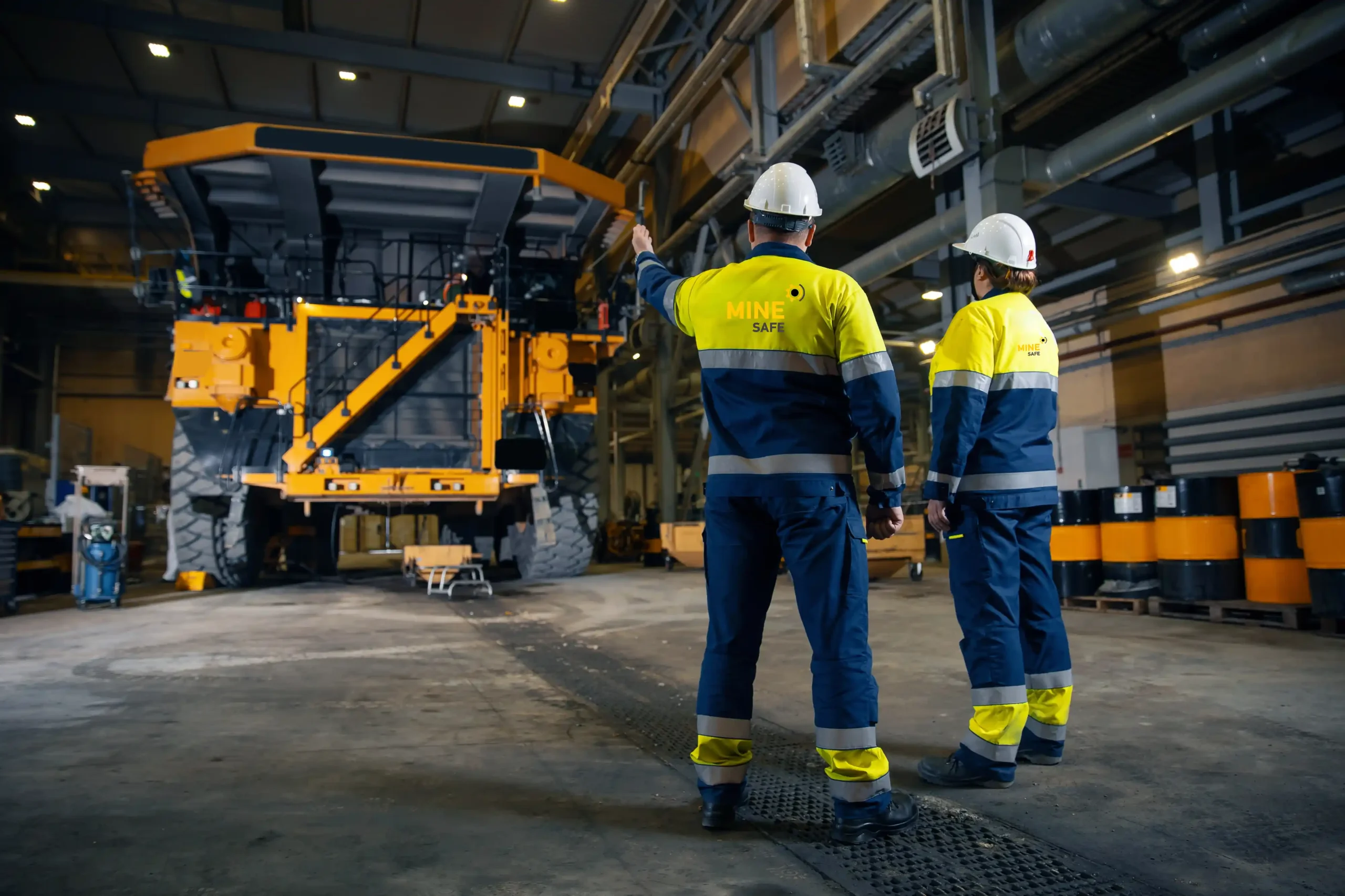


Different Manufacturers. Different Machines. One Safety Standard.
Modern mining operations rarely depend on a single equipment manufacturer.
Across surface mines, underground operations, quarries and mineral processing environments, fleets often consist of machinery from multiple original equipment manufacturers (OEMs), operating across different generations, technologies and control systems.
From Caterpillar haul trucks and Komatsu excavators to Bell articulated dump trucks, Sandvik underground loaders and Epiroc drilling equipment, every machine presents unique operational and integration requirements.
For mining operators, this creates a fundamental challenge:
How do you achieve consistent, fleet-wide Level 9 collision prevention when every machine operates differently?
Mine Safe Global addresses this challenge through advanced collision avoidance technology and its innovative MI Machine Controller Interface (MCI), designed to bridge the gap between collision detection and machine intervention.
Our approach enables mining operations to pursue a unified collision prevention strategy across modern intelligent equipment, older legacy machinery and mixed OEM fleets.
Different machines. Different technologies. One safety expectation.
Breaking Down OEM Integration Barriers
Traditional collision avoidance integration can become complicated when mining operations use machinery from multiple manufacturers.
Different OEMs may employ proprietary communication protocols, electronic control architectures, hydraulic systems and braking mechanisms.
While newer mining machines increasingly support electronic communication and machine intervention, older equipment may lack the interfaces required for automated collision prevention.
This creates significant challenges for mining operators seeking to implement Level 9 collision prevention consistently across their fleets.
Replacing otherwise productive machinery simply to accommodate newer safety technologies is rarely an economically practical solution.
Mine Safe Global’s machine integration philosophy addresses this challenge by enabling collision avoidance technologies to communicate with different machine control systems through appropriate OEM or aftermarket interfaces.
Rather than requiring every machine to operate on an identical platform, our technology provides an adaptable integration pathway that can be assessed according to the machine’s configuration.
The Mine Safe MI Machine Controller Interface
Bridging Collision Detection and Machine Intervention
At the centre of Mine Safe Global’s integration capabilities is the MI Machine Controller Interface (MCI).
The MCI serves as the critical connection between collision avoidance systems and machine control functions.
While conventional proximity detection systems alert operators to potential hazards, Level 9 collision prevention introduces an additional layer of protection through automated machine intervention.
Depending on the machine configuration and validated integration, intervention may include:
- Automatic speed reduction.
- Controlled deceleration.
- Throttle intervention.
- Braking intervention.
- Prevention of unsafe machine movement.
- Communication between collision avoidance and machine control systems.
- Intervention event logging and operational reporting.
The MCI is designed to support integration across both intelligent OEM machinery and older non-intelligent equipment.
This creates opportunities to modernise existing mining fleets without automatically requiring complete equipment replacement.
Modern Equipment Integration
Many newer mining machines use electronic control networks and sophisticated onboard management systems.
Where suitable interfaces are available, the MCI can facilitate communication between collision avoidance technology and the machine’s control architecture.
Integration requirements are evaluated according to the OEM’s specifications, machine configuration and applicable safety requirements.
Legacy Mining Equipment Integration
Older mining equipment remains an essential part of many operations.
However, these machines may not feature the electronic control interfaces found in modern equipment.
Mine Safe Global’s approach accommodates engineered integration solutions for legacy machinery, subject to technical assessment and validation.
This provides mining operators with an opportunity to extend modern collision prevention capabilities to older assets while protecting existing equipment investments.
OEM Integration Across Surface Mining Equipment
Surface mining environments depend on large, powerful machinery operating in dynamic and often congested conditions.
Haul roads, loading zones, tipping areas, maintenance facilities and intersections introduce potential interactions between heavy equipment, light vehicles and pedestrians.
Mine Safe Global’s collision prevention technologies can be evaluated for integration across multiple surface mining equipment categories.
Mining Haul Trucks
Large haul trucks operate in environments where restricted visibility, substantial vehicle mass and long stopping distances increase collision risks.
OEM integration opportunities include equipment manufactured by Caterpillar, Komatsu, Hitachi, Liebherr, BELAZ, SANY and XCMG.
Articulated Dump Trucks
Articulated dump trucks are widely used in mining, quarrying and earthmoving operations.
Their articulated steering systems and operating characteristics require appropriate consideration when implementing collision prevention technologies.
Relevant manufacturers include Bell Equipment, Volvo, Caterpillar, Komatsu and other articulated hauler OEMs.
Mining Excavators and Shovels
Large excavators and mining shovels frequently operate near haul trucks, support vehicles and maintenance personnel.
Collision avoidance integration can contribute to improved situational awareness and safer equipment interactions.
Wheel Loaders and Dozers
Wheel loaders, bulldozers and other earthmoving equipment regularly operate in areas where pedestrians and vehicles share working spaces.
Appropriate collision avoidance and intervention technologies can help manage these interactions.
Underground Mining Equipment Integration
Underground mining presents a particularly demanding operating environment.
Restricted visibility, confined tunnels, limited escape routes, complex traffic movements and frequent pedestrian interactions make effective collision prevention essential.
Mine Safe Global’s underground safety technologies, including HaloGuard and HaloTag, support a broader approach to underground collision prevention.
OEM integration opportunities extend across:
Underground loaders manufactured by Sandvik, Epiroc, GHH, Caterpillar, AARD and other specialist manufacturers.
Mining trucks designed for underground material transport, including equipment from Sandvik, Epiroc, GHH and Caterpillar.
Underground drilling rigs, roof bolters and specialist development equipment.
Personnel carriers, maintenance vehicles, scissor lifts, service vehicles and other underground support equipment.
Specialist machinery designed for narrow-seam and low-profile mining environments.
Every underground integration requires consideration of the equipment’s operating characteristics, control architecture and applicable mine safety requirements.
Light-Duty Vehicle Integration
Collision risks are not limited to heavy mining machinery.
Light-duty vehicles frequently share haul roads and operational areas with substantially larger equipment.
These vehicles may include Toyota Hilux and Land Cruiser models, Ford Rangers, Isuzu D-MAX vehicles, Nissan pickups and other mine-site support vehicles.
Mine Safe Global’s MCI technology provides a pathway for evaluating appropriate collision prevention integration on light-duty vehicles.
By incorporating LDVs into the broader collision prevention strategy, mining operators can work towards consistent safety management across heavy equipment and support fleets.
ISO 21815 and Level 9 Collision Prevention
Effective OEM integration requires more than establishing communication between a collision avoidance system and a machine.
The integration must support appropriate, predictable and validated intervention behaviour.
ISO 21815 provides an important international framework for collision warning and avoidance systems used with earthmoving machinery.
For mining operations implementing Level 9 collision prevention, relevant considerations include:
- Machine communication interfaces.
- Collision avoidance system integration.
- Intervention functionality.
- Functional safety requirements.
- Machine-specific validation.
- Appropriate testing and commissioning.
Mine Safe Global’s integration approach is designed around these requirements and the broader collision prevention expectations of modern mining operations.
Individual machine compatibility and intervention functionality must be confirmed through technical assessment and applicable validation procedures.
Supporting Mixed OEM Mining Fleets
One of the greatest challenges facing mining operators is managing equipment from different manufacturers under a unified safety strategy.
A single operation may have Caterpillar haul trucks, Komatsu excavators, Bell articulated dump trucks, Sandvik underground equipment and Toyota support vehicles.
Each manufacturer may employ different communication technologies and control systems.
Mine Safe Global’s machine integration approach is designed to help bridge these differences.
The objective is straightforward:
One collision prevention strategy across multiple OEM brands, machine generations and operating environments.
This enables mining operators to pursue greater consistency in collision prevention while maintaining flexibility in their equipment procurement and fleet management decisions.
Why OEM-Independent Integration Matters
1. Protect Existing Equipment Investments
Mining equipment represents a substantial capital investment.
Integration technologies that accommodate existing machinery can reduce the need for premature equipment replacement.
2. Improve Fleet-Wide Safety Consistency
A unified collision prevention strategy helps reduce differences in safety functionality across mixed equipment fleets.
3. Support Level 9 Implementation
Appropriate machine integration creates a pathway towards automated intervention capabilities where technically feasible and validated.
4. Accommodate Legacy Equipment
Older machines can be assessed for engineered collision prevention integration rather than automatically being excluded from fleet modernisation programmes.
5. Simplify Safety Technology Planning
A coordinated integration strategy can help mining operators manage multiple OEM brands within a broader collision prevention framework.
6. Support Future Fleet Expansion
As new machinery enters an operation, its integration requirements can be assessed against the mine’s existing collision prevention architecture.
A Smarter Approach to Mining Equipment Integration
Mining safety should not depend on the manufacturer of a machine, its age or the technology available when it was originally produced.
Mine Safe Global is committed to helping mining operators overcome the complexity of mixed-fleet collision prevention.
Through our MI Machine Controller Interface, collision avoidance technologies and engineered integration solutions, we provide a pathway towards more consistent safety functionality across modern and legacy equipment.
From surface haul trucks and underground loaders to articulated dump trucks and light-duty vehicles, our objective remains the same:
Enable safer machine interactions through intelligent, adaptable collision prevention technology.
Frequently Asked Questions
What is the MI Machine Controller Interface (MCI)?
The MCI serves as the critical connection between collision avoidance systems and machine control functions. The MCI is designed to support integration across both intelligent OEM machinery and older non-intelligent equipment.
What intervention can Level 9 collision prevention include?
Depending on the machine configuration and validated integration, intervention may include automatic speed reduction, controlled deceleration, throttle intervention, braking intervention, prevention of unsafe machine movement, communication between collision avoidance and machine control systems, and intervention event logging and operational reporting.
Can older or legacy mining equipment be integrated?
Mine Safe Global’s approach accommodates engineered integration solutions for legacy machinery, subject to technical assessment and validation. This provides mining operators with an opportunity to extend modern collision prevention capabilities to older assets while protecting existing equipment investments.
Which OEM brands can be integrated?
OEM integration opportunities include haul trucks manufactured by Caterpillar, Komatsu, Hitachi, Liebherr, BELAZ, SANY and XCMG; articulated dump trucks from Bell Equipment, Volvo, Caterpillar, Komatsu and other articulated hauler OEMs; and underground loaders manufactured by Sandvik, Epiroc, GHH, Caterpillar, AARD and other specialist manufacturers.
Can light-duty vehicles be included?
Yes. Mine Safe Global’s MCI technology provides a pathway for evaluating appropriate collision prevention integration on light-duty vehicles, including Toyota Hilux and Land Cruiser models, Ford Rangers, Isuzu D-MAX vehicles, Nissan pickups and other mine-site support vehicles.
How does ISO 21815 relate to Level 9 collision prevention?
ISO 21815 provides an important international framework for collision warning and avoidance systems used with earthmoving machinery. Individual machine compatibility and intervention functionality must be confirmed through technical assessment and applicable validation procedures.
Integrate Your Mining Fleet with Mine Safe Global
Operating a mixed OEM fleet?
Upgrading older machinery?
Implementing Level 9 collision prevention across surface or underground operations?
Mine Safe Global can assist in assessing your equipment integration requirements and identifying appropriate collision prevention solutions.
Contact Mine Safe Global to discuss your OEM equipment integration requirements and take the next step towards fleet-wide Level 9 collision prevention.
One Fleet. One Safety Standard. Mine Safe Global.
Last updated by Mine Safe Global