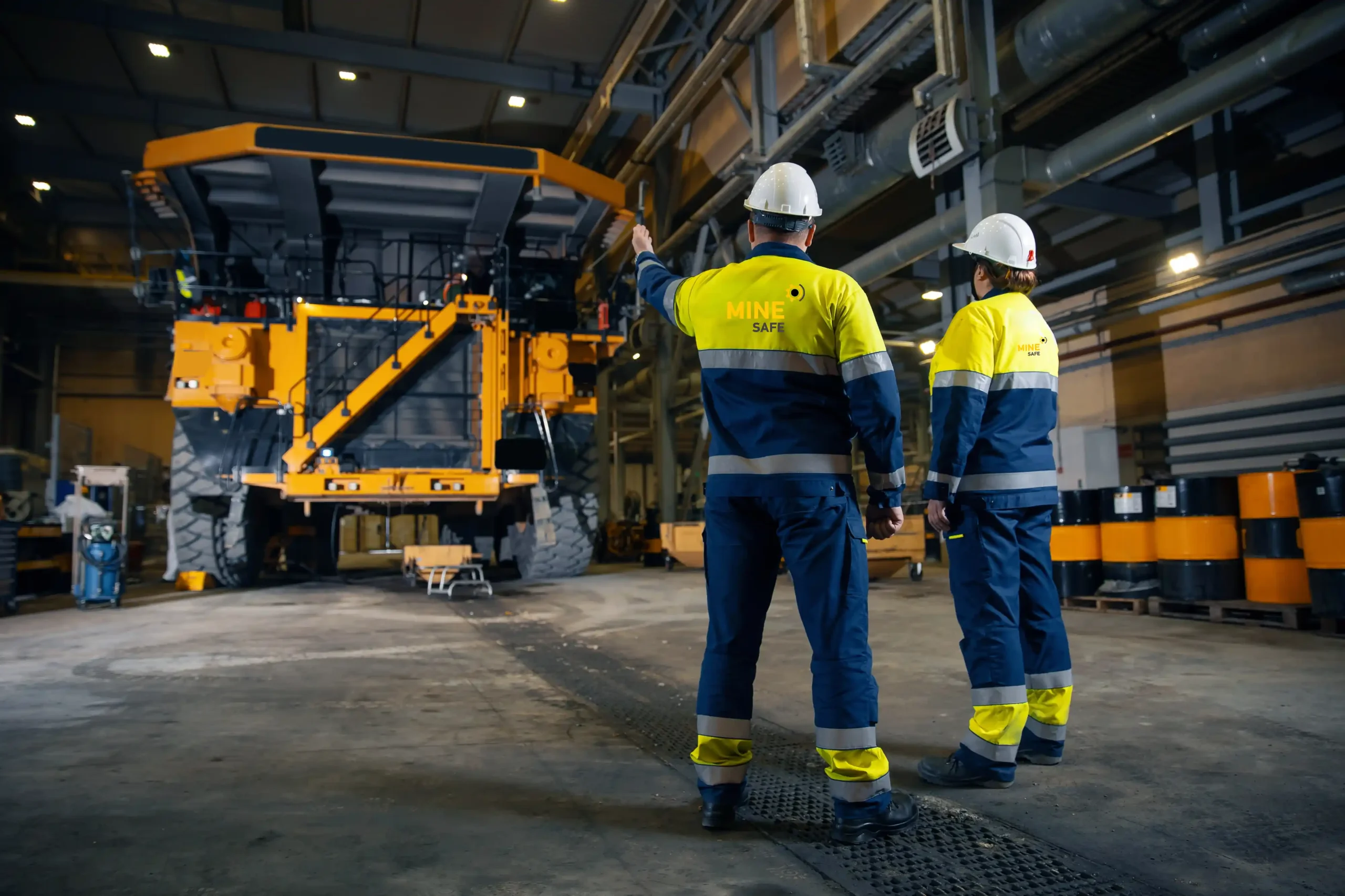

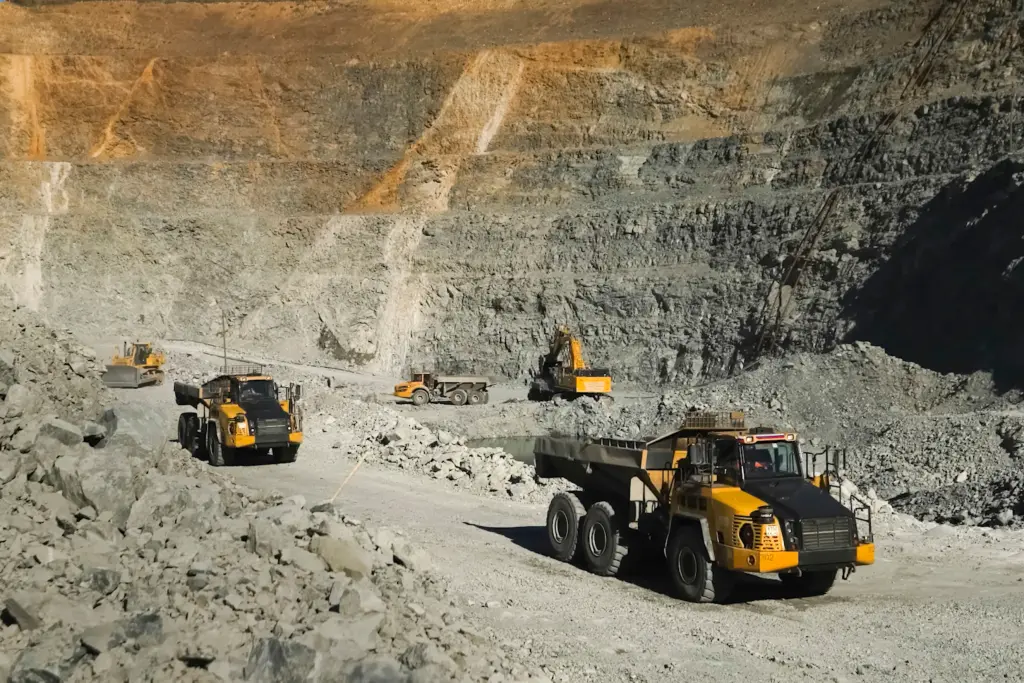
Most fatal vehicle interactions in mining are not caused by people ignoring danger — they are caused by people never becoming aware of it in time. A haul truck operator cannot see a worker on foot beside the machine; a pedestrian cannot tell that a reversing loader is about to move. Proximity awareness technology exists to solve that human problem: keeping every operator and every person on foot continuously aware of the hazards around them, so a developing collision is noticed and avoided while there is still time to act.
What is proximity awareness technology?
Proximity awareness technology is the class of mine-safety systems whose purpose is to keep operators and pedestrians continuously informed about the people, vehicles and equipment near them. Rather than leaving safety to line of sight, memory and reaction, it delivers a clear, timely signal — a light, a tone, a vibration, an in-cab display — the moment someone or something enters a hazardous area, so the person can respond before a near-miss becomes a collision.
The emphasis is on awareness: turning invisible risk into information a human can act on. This makes it as much about human factors — attention, reaction, trust in the alert — as about the equipment itself. The underlying sensing is provided by a proximity detection system, which is the hardware that detects presence; proximity awareness technology is what that detection is for.
Why awareness fails without technology
Mining vehicles create awareness gaps that no amount of care fully closes. Large machines have deep blind spots close to the body and behind them. Underground, the same narrow roadways are shared by machines and people on foot, in darkness, dust and noise. Operators fatigue over long shifts; pedestrians misjudge a machine’s intentions; both can be distracted at the critical second.
Traditional awareness aids — mirrors, cameras, reversing alarms, high-visibility clothing, spotters and traffic rules — all help, but each still depends on a person noticing something at exactly the right moment. Proximity awareness technology removes that dependency: it monitors the danger zone constantly and pushes an alert to the people who need it, whether or not they happened to be looking.
How proximity awareness technology protects people
Good proximity awareness technology works on two sides of every interaction at once. It warns the operator in the cab that a person or vehicle has entered a hazard zone, and it warns the person on foot, through a wearable tag or personal alarm device, that they are close to a machine. Alerting both parties matters, because either one may be the one able to break the chain — the operator by stopping, the pedestrian by stepping clear.
Alerts are usually tiered to match the risk. An outer zone triggers a low-level awareness signal — a person is nearby, stay alert. An inner zone triggers an urgent warning — danger, act now. This graded approach keeps people informed without flooding them with alarms, which is essential: an awareness system people learn to ignore is worse than none at all, so credibility and low false-alarm rates are central to whether the technology actually changes behaviour.
Proximity awareness and the EMESRT nine-level model
Proximity awareness technology has a precise home in the industry’s recognised safety framework. The EMESRT (Earth Moving Equipment Safety Round Table) nine-level model of vehicle interaction controls defines nine layers of defence, and awareness is the first of the technology layers:
- Level 7 — Operator Awareness: the system detects a hazard and alerts the operator, who decides how to react. This is proximity awareness technology in its purest form.
- Level 8 — Advisory Controls: the system advises evasive action or automatically de-rates the machine. The operator still acts.
- Level 9 — Intervention Controls: the system takes control and slows or stops the machine automatically when the operator does not respond.
Awareness at Level 7 is the foundation the higher levels build on. A machine can only advise (Level 8) or intervene (Level 9) once it is aware of a hazard — so proximity awareness is where every collision-prevention strategy begins. For the top of that ladder, see our guide to the Level 9 Collision Avoidance System.
Awareness, detection and avoidance: how the terms fit together
Three terms are often used loosely, so it helps to place them side by side. Proximity awareness technology is the goal — keeping people informed of nearby hazards. A proximity detection system is the means — the sensing hardware that detects presence and feeds the awareness signal. Collision avoidance is the next step up — using that same detection to advise or physically intervene when awareness alone is not enough.
In everyday use they overlap, and the same equipment often delivers all three. If you want the hardware detail behind the awareness — how electromagnetic, RFID, radar, GPS and UWB sensing actually create the zones — our companion guide to the proximity detection system covers it in full.
Proximity awareness technology and South African mines
South Africa has driven some of the world’s most demanding requirements for controlling vehicle interactions. Under the Mine Health and Safety Act, mines must manage the risk of collisions between machines, vehicles and people, and the Department of Mineral Resources and Energy has been phasing in collision prevention requirements on trackless mobile machinery (TMM), with the EMESRT levels — awareness, advisory and intervention — as the reference points.
The Minerals Council South Africa has run a multi-year special project to align the industry on these requirements and help mines progress up the EMESRT ladder toward full Level 9 intervention. For South African operations, proximity awareness technology is the essential first rung: the layer that makes hazards visible and gives people the chance to react, and the base on which advisory and intervention controls are added. It sits at the heart of the industry’s shared commitment to Zero Harm.
How Mine Safe Global can help
Mine Safe Global supplies proximity awareness and collision avoidance technology built around EMESRT requirements, protecting both operators and people on foot and scaling from clear in-cab and wearable awareness alerts through to full Level 9 automated intervention. Whether you are raising awareness across a fleet, meeting a compliance deadline, or building a complete collision-prevention strategy, our specialists can help you put the right approach in place for your sites, machines and people.
Talk to a Mine Safe Global safety expert about proximity awareness and collision prevention →
Frequently asked questions
What is proximity awareness technology in mining?
Proximity awareness technology is a class of mine-safety systems that keeps operators and people on foot continuously informed about the vehicles, machines and people near them, alerting them the moment someone or something enters a hazardous area so a collision can be avoided while there is still time to react.
What is the difference between proximity awareness technology and a proximity detection system?
Proximity awareness technology is the goal of keeping people informed of nearby hazards, while a proximity detection system is the sensing hardware that detects presence and generates the awareness signal. In practice the same equipment usually delivers both — detection is the means, awareness is the purpose.
How does proximity awareness technology protect pedestrians?
It warns people on foot through a wearable tag or personal alarm device when they are close to a machine, at the same time as it warns the operator in the cab. Alerting both parties means either one can act to prevent a collision — the operator by stopping, the pedestrian by moving clear.
Where does proximity awareness fit in the EMESRT levels?
Proximity awareness is EMESRT Level 7, Operator Awareness — the first of the three technology layers. The system detects a hazard and alerts the operator, who decides how to react. It is the foundation that Level 8 advisory controls and Level 9 automated intervention build upon.
Is proximity awareness technology required in South African mines?
South African mines must manage vehicle-interaction risk under the Mine Health and Safety Act, and the Department of Mineral Resources and Energy has been phasing in collision prevention requirements on trackless mobile machinery using the EMESRT levels as reference points. Proximity awareness is the essential first layer in meeting those obligations.