Mine Safe Global is the first company in the world to achieve independent MOSH TRL4 verification for both its Collision Detection (CxD) system and Machine Control Interface (MCI) within a single integrated collision prevention product range. The verification was independently conducted by the University of Pretoria.Every collision prevention system claims to improve safety. The real question is whether that technology has been independently verified to perform under recognised testing conditions. As mining operations increasingly adopt automated collision prevention technologies, independent verification has become an important benchmark for demonstrating reliable performance before deployment.
What is TRL4?
Technology Readiness Level 4 (TRL4) is the first stage at which collision prevention technology undergoes independent verification against recognised industry specifications rather than supplier-led demonstrations, providing mining companies with greater confidence in system performance.
What TRL4 Actually Validates
- Reliable object detection
- Warning logic performance
- Automated machine intervention
- Braking response
- Fail-safe functionality
- Diagnostics and system redundancy
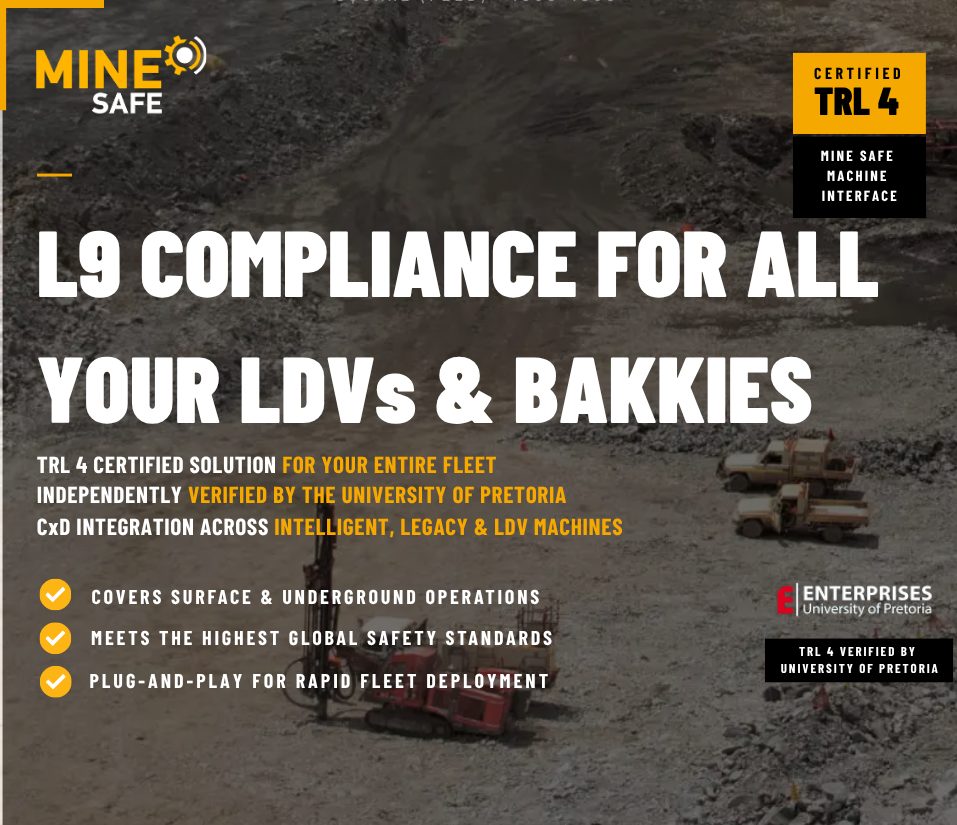
The University of Pretoria’s independent verification confirms that both the Collision Detection (CxD) system and Machine Control Interface (MCI) meet the MOSH Technology Readiness Level 4 specification for automated collision prevention. Together, they form the first dual MOSH TRL4 verified solution of its kind.
Why Both Components Matter
A Level 9 collision prevention system is only as strong as the link between detection and intervention. The CxD identifies hazards, while the Machine Control Interface (MCI) automatically commands the machine to slow or stop. Although some providers have independently verified one of these technologies, Mine Safe Global is the first to achieve MOSH TRL4 verification for both within a single integrated product range.
What MOSH TRL4 Verification Means
Independent verification provides mining companies with greater confidence that a system has demonstrated repeatable performance before deployment in operational environments. Technology Readiness Level 4 is the point at which a safety technology stops being a promise and becomes a verified fact. Under the MOSH framework of the Minerals Council South Africa, systems are tested against a published specification covering detection capability, response timing, control integration, logging, and fail-to-safe behaviour.
The testing is carried out by the University of Pretoria, widely regarded as the global benchmark for collision prevention system verification. Certification from UP is not a demonstration or a marketing exercise. It is independent scientific confirmation that the technology does what its developer claims, measured under controlled conditions before it ever reaches an operating mine.
Why This Is Such an Achievement
The Technology Readiness Level scale was originally developed by NASA to measure technology maturity. TRL4 is the first stage where independent scientific testing replaces supplier demonstrations. Under the MOSH framework, the University of Pretoria evaluates detection capability, response timing, machine control integration, logging and fail-safe behaviour against published specifications. This independent verification provides objective evidence that a system performs as claimed before deployment.
Achieving MOSH TRL4 verification for one technology is a significant engineering milestone. Achieving independent verification for both collision detection and machine intervention within a single integrated product range represents a world first, providing objective evidence that the complete detection-to-intervention chain has been independently validated.
Why Independent Verification Matters to Mine Operators
For a mine operator, TRL4 verification is not just an engineering milestone — it changes the basis on which a collision prevention system can be evaluated, purchased, and implemented.
- Greater procurement confidence through third-party validation.
- Reduced implementation risk by verifying performance before deployment.
- Objective supplier comparisons using recognised test criteria.
- Greater confidence that both detection and intervention perform to specification.
- Stronger support for compliance and due diligence.
Rather than relying solely on supplier claims, mining companies can evaluate independently verified evidence.
Developed and Deployed, Not Just Designed
Mine Safe Global develops its CxD and MCI technologies in-house and deploys them across operating mines worldwide. The company’s MOSH TRL4 verification complements ISO 21815 compliance, ICASA, EMI/EMC, MTEx and IP certifications, providing mining companies with independently verified collision prevention technology for both surface and underground operations.
As mining companies continue investing in safer and more intelligent operations, independently verified collision prevention technologies provide greater confidence in procurement, deployment, and long-term operational performance. Mine Safe Global’s TRL4 verification demonstrates the growing importance of independent validation in advancing mining safety technologies.
Contact Mine Safe Global
📞 Phone: +27 87 711 2080
📧 Email: info@minesafeglobal.com
🌐 Website: minesafeglobal.com/mining-safety-systems/level-9-collision-prevention-system/