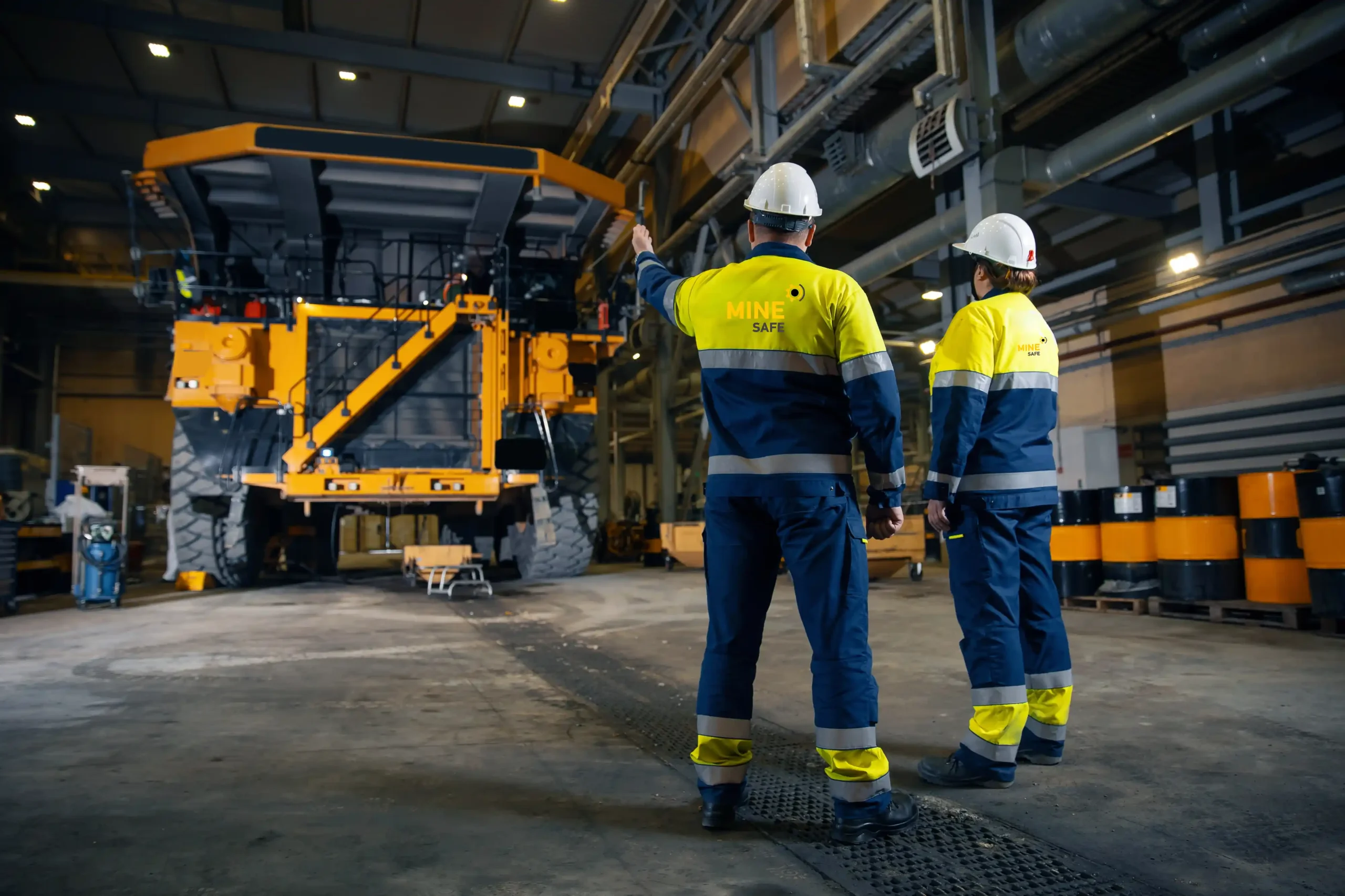


Modern mining fleets don’t run on a single brand. When Caterpillar haul trucks operate alongside Komatsu excavators, Sandvik underground loaders, and Bell articulated dump trucks, achieving consistent Level 9 collision prevention across all equipment becomes critical. Mine Safe Global’s MI Machine Controller Interface solves this challenge—enabling unified collision prevention functionality across mixed OEM fleets without mandatory equipment replacement.
The Mixed-Fleet Collision Prevention Challenge
Most mining operations face a reality that equipment manufacturers rarely acknowledge: mines don’t run single-brand fleets.
A typical surface mining operation might operate:
- Caterpillar or Komatsu haul trucks (primary material haulage)
- Bell or Volvo articulated dump trucks (loading zone dumping)
- Hitachi or Liebherr excavators (material loading)
- Sandvik or Epiroc drill rigs and development equipment
- Toyota, Isuzu, or Nissan support and personnel vehicles
Each manufacturer uses proprietary communication protocols, different electronic architectures, distinct hydraulic and braking systems, and independent control logic. Each machine operates as a separate system with no unified collision prevention framework.
The Core Problem: Traditional collision avoidance systems were designed for single OEM implementations or narrow multi-brand partnerships. Integrating consistent Level 9 collision prevention across mixed equipment brands requires a fundamentally different architectural approach.
Without effective OEM integration, mining operators face three problematic choices:
- Vendor lock-in: Standardize your entire fleet on one OEM brand (operationally limiting, financially expensive)
- Multiple systems: Deploy different collision prevention solutions for different equipment brands (complex, expensive, creates safety inconsistencies)
- Equipment replacement: Replace older, productive machinery to accommodate newer safety technology (financially prohibitive)
Mine Safe Global eliminates this dilemma through OEM-independent integration architecture. Our MI Machine Controller Interface enables consistent Level 9 collision prevention across your entire mixed fleet—modern and legacy equipment, all OEM brands, all mining types.
The MI Machine Controller Interface: Universal OEM Integration
The MI Machine Controller Interface (MCI) is the critical bridge between collision detection systems and machine control functions across different equipment manufacturers.
How Universal Integration Works
Rather than requiring each machine to operate on an identical platform or compatibility standard, the MI system provides an adaptable integration pathway that assesses each machine’s control architecture and establishes appropriate communication channels:
Electronic control networks (CAN Bus, proprietary systems) connect directly to collision avoidance systems for real-time communication and intervention
Engineered integration solutions enable automated or semi-automated collision prevention on older non-intelligent machinery without hardware replacement
Mixed generations and brands operate under one unified collision prevention strategy with consistent intervention behavior
Add new equipment to your operation without redesigning your entire collision prevention infrastructure
Level 9 Intervention Capabilities Through MI
Where technically feasible and validated, the MI interface enables the following Level 9 collision prevention interventions:
- Automatic speed reduction and controlled deceleration
- Throttle and braking intervention
- Prevention of unsafe or unintended machine movement
- Real-time two-way communication between collision avoidance and machine control
- Comprehensive intervention event logging and operational reporting
- Compliance documentation for regulatory validation
OEM Integration Across Surface Mining Equipment
Surface mining environments present unique collision prevention challenges: restricted operator visibility, massive vehicle mass, extended stopping distances, and constant equipment movement across congested mine sites.
Haul Trucks: The Heavy Haulers
Challenge: Haul trucks move the largest loads across the most congested areas. Blind spots, high-speed travel, and constant pedestrian/equipment interaction create high-collision-risk environments.
Supported Manufacturers: Caterpillar, Komatsu, Hitachi, Liebherr, BELAZ, SANY
The MI interface enables real-time collision detection and intervention across all these platforms through appropriate CAN Bus, controller area networks, or proprietary communication protocols. Each haul truck integration is validated according to ISO 21815 standards.
Articulated Dump Trucks
Challenge: ADTs operate in high-density loading and dumping zones where precision driving and tight maneuvering are required. Articulated steering creates unique blind zones.
Supported Manufacturers: Bell Equipment, Volvo, Caterpillar, Komatsu
ADT integration through the MI interface addresses the unique challenge of articulated steering systems while maintaining consistent collision prevention across different steering architectures.
Excavators and Material Loading Equipment
Challenge: Large excavators operate in close proximity to haul trucks and support vehicles. Bucket positioning and boom movement create restricted visibility zones.
Supported Manufacturers: Caterpillar, Komatsu, Hitachi, Liebherr
Wheel Loaders and Bulldozers
Challenge: Loaders and dozers operate in loading zones, maintenance areas, and access roads where pedestrian and equipment interactions are constant.
Supported Manufacturers: Caterpillar, Komatsu, Liebherr
OEM Integration Across Underground Mining Equipment
Underground mining presents significantly greater collision prevention demands than surface operations. Confined tunnels, severely restricted visibility, limited escape routes, and complex multi-directional traffic flows create the highest-risk environments in mining.
Mine Safe Global’s underground-specific systems (HaloGuard collision prevention, HaloTag personnel tracking) integrate with:
Load Haul Dump Machines (LHDs)
Challenge: LHDs operate in the densest underground traffic patterns, often in narrow tunnels with severely restricted visibility and frequent personnel interaction.
Supported Manufacturers: Sandvik, Epiroc, GHH, Caterpillar
LHD collision prevention is essential for MHSA Section 16.7 personnel safety compliance and for preventing vehicle-to-pedestrian collisions in confined spaces.
Underground Haul Trucks
Challenge: Underground haul trucks transport ore through confined tunnels where visibility is often <20 meters and pedestrian density is high.
Supported Manufacturers: Sandvik, Epiroc, GHH, Caterpillar
Drilling and Development Equipment
Roof bolters, drill rigs, and specialist development equipment require collision prevention integration to protect both operators and nearby personnel working in confined spaces.
Underground Support Vehicles
Personnel carriers, maintenance vehicles, scissor lifts, and utility vehicles require comprehensive collision prevention to protect operators and personnel.
Light-Duty Vehicle Integration
Collision risks extend beyond heavy mining machinery. Support vehicles sharing haul roads and operational areas with substantially larger equipment face significant risk. Mine Safe Global’s MI interface enables collision prevention integration on:
- Toyota Hilux, Land Cruiser, Fortuner (popular in African mining operations)
- Ford Ranger, F-150
- Isuzu D-MAX, MU-X
- Nissan Navara, Patrol
- Mitsubishi Triton, Pajero
LDV integration protects operators and personnel working in mixed-equipment environments, ensuring consistent safety across all vehicle types.
ISO 21815 Compliance Through OEM Integration
Effective OEM integration must meet international collision prevention standards. ISO 21815 provides the framework for collision warning and avoidance systems in earthmoving machinery.
| ISO 21815 Requirement | Mine Safe Global Implementation |
|---|---|
| Machine communication interfaces | CAN Bus, proprietary protocols, and engineered solutions assessed and validated for each machine model |
| System integration validation | Appropriate testing and commissioning for each integration, aligned with ISO 21815 requirements |
| Intervention functionality | Appropriate intervention validated and documented; tailored to specific machine control architecture |
| Functional safety requirements | Integration designed to support appropriate, predictable and validated intervention behaviour |
| Machine-specific validation | Technical assessment and testing for each OEM/model combination; compliance documentation provided |
Why OEM-Independent Integration Matters for Mining Operations
Extend collision prevention to existing machinery; avoid mandatory replacement of productive assets
Buy equipment based on job requirements and capabilities, not collision prevention compatibility constraints
One safety expectation across all equipment, all OEM brands, all equipment generations
Support MHSA 8.10, DMRE, ISO 21815 and other jurisdictional requirements across mixed equipment fleets
Add new equipment to operations without reworking your entire collision prevention strategy
Evolve your fleet composition without creating safety gaps or requiring system redesign
OEM Integration Assessment and Implementation Process
Every mining operation has unique equipment configurations, control architectures, and safety requirements. Mine Safe Global’s approach to OEM integration follows a structured assessment methodology:
- Equipment Audit: Complete inventory of all machinery—manufacturers, models, control systems, communication capabilities, intervention systems
- Technical Assessment: Evaluate each machine’s communication interfaces, automation capabilities, and collision prevention integration potential
- Integration Strategy Development: Create a phased integration plan, prioritizing highest-risk equipment first
- Validation & Testing: Conduct ISO 21815-aligned testing and commissioning for each integrated machine
- Operator Training: Comprehensive training for equipment operators on integrated collision prevention functionality
- Performance Monitoring: Continuous monitoring through TrackPro fleet management dashboard with intervention event analysis
Assess Your Mixed-Fleet OEM Integration Requirements
Operating mixed equipment fleets from multiple manufacturers? Uncertain about which equipment can integrate with Level 9 collision prevention? Need to extend safety to aging but productive machinery?
Mine Safe Global evaluates your specific fleet composition and provides a customized OEM integration strategy tailored to your equipment, mining type, operational environment, and regulatory requirements.
Key Takeaways: OEM Integration for Mixed Mining Fleets
Integration Fundamentals for Mine Operators
- One Strategy, Multiple Brands: Achieve consistent Level 9 collision prevention across Caterpillar, Komatsu, Sandvik, Epiroc, Bell and other OEM brands
- No Mandatory Equipment Replacement: Integrate modern and legacy equipment into unified safety framework; protect equipment investments
- Aligned with ISO 21815: Each integration assessed, tested and commissioned against the international framework for collision warning and avoidance
- Scalable Architecture: Add equipment or expand to new mining operations without redesigning collision prevention infrastructure
- Comprehensive Fleet Visibility: Fleet-wide integration event logging and safety monitoring through TrackPro dashboard
- Regulatory Support: Helps operations work towards MHSA 8.10, DMRE and other jurisdictional collision prevention requirements
Frequently Asked Questions
Can Level 9 collision prevention integrate with different OEM equipment brands?
Yes. Mine Safe Global’s MI Machine Controller Interface enables Level 9 collision prevention integration across Caterpillar, Komatsu, Sandvik, Epiroc, Bell and other OEM equipment brands, subject to technical assessment, through appropriate communication protocols and control architecture interfaces.
Does OEM integration require equipment replacement?
No. The MI interface supports both modern equipment with electronic control networks and legacy machinery through engineered integration solutions, allowing operators to extend collision prevention to existing equipment without mandatory replacement.
How does OEM integration align with ISO 21815?
Mine Safe Global’s OEM integration approach is designed around ISO 21815 requirements. Each integration is assessed, tested and commissioned against the international framework for collision warning and avoidance systems in earthmoving machinery.
Which Level 9 interventions can the MI interface provide?
Where technically feasible and validated, the MI interface enables automatic speed reduction and controlled deceleration, throttle and braking intervention, prevention of unsafe or unintended machine movement, and intervention event logging and operational reporting.
Can light-duty vehicles be included in a mixed-fleet collision prevention strategy?
Yes. Mine Safe Global’s MI interface enables collision prevention integration on light-duty vehicles such as the Toyota Hilux, Land Cruiser, Ford Ranger, Isuzu D-MAX and Nissan Navara that share haul roads with heavy equipment.
Related Mine Safe Global Resources
Contact Mine Safe Global: OEM Integration Assessment
Ready to Implement Consistent Level 9 Collision Prevention Across Your Mixed OEM Fleet?
Mine Safe Global specializes in custom OEM integration solutions for mining operations with mixed equipment fleets.
Phone: +27 87 711 2080
Email: info@minesafeglobal.com
Website: minesafeglobal.com
About Mine Safe Global: We design and manufacture Level 9 collision prevention systems, fatigue monitoring, and personnel tracking solutions for mining operations worldwide. Our integrated ecosystem—Level 9, Level 8, HaloGuard, HaloTag, and TrackPro—protects operators and personnel across surface and underground mining environments. Deployed in South Africa, Australia, North America, Europe, and Asia-Pacific. Visit minesafeglobal.com to learn more about OEM integration, Level 9 collision prevention, and unified mining safety.
Last updated by Mine Safe Global