
What Is the Difference Between Level 7, Level 8 and Level 9?
In the EMESRT vehicle interaction framework, mining collision avoidance is grouped into three levels. Level 7 provides operator awareness, Level 8 provides advisory controls, and Level 9 enables automatic machine intervention.
Two mining operations can both say they have collision avoidance. One may only warn the operator, while the other can slow or stop a machine automatically.
Which level is your operation actually using?
Proximity detection and collision avoidance systems are not all the same. Knowing the difference between Levels 7, 8 and 9 tells you what is actually protecting people on site.
Watch: Level 7 vs Level 8 vs Level 9 Mining Collision Avoidance Explained
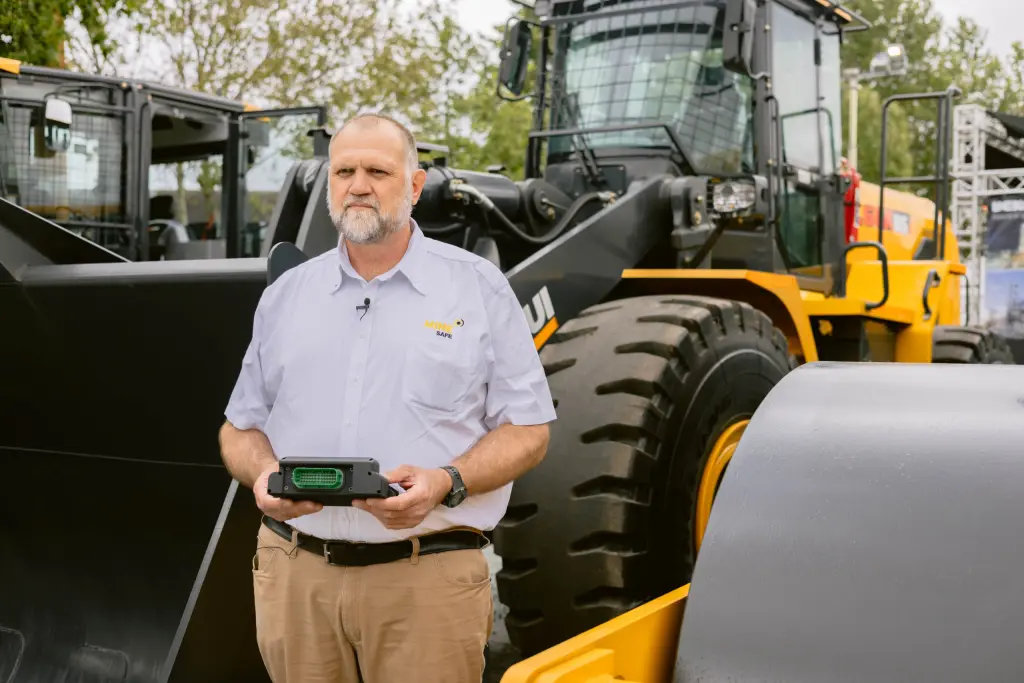
Mine Safe Global Founder & Director Bino Etsebeth and Operations Manager Marius De Meyer discuss the progression from operator awareness to advisory controls and automatic machine intervention.
Prefer YouTube? Watch Level 7 vs Level 8 vs Level 9 on the Mine Safe Global YouTube channel.
Understanding the Three Levels
The levels describe what a collision avoidance system does once it detects a hazard. They run from warning people through to intervening on the machine, so each step adds more control over the risk.
Level 7: Operator Awareness
The system detects nearby vehicles, equipment or people and alerts the machine operator to the risk.
Alerts are commonly audible or visual. The operator remains responsible for reacting and avoiding the collision.
Level 8: Advisory Controls
The system provides more specific guidance or control responses, such as prompting corrective action or, in appropriate configurations, vehicle de-rating.
The machine is advised rather than automatically intervened upon. The outcome depends on how the system is set up for the installation.
Level 9: Intervention Controls
When a hazardous interaction requires action, the system can slow, stop or inhibit machine movement.
This requires integration with the machine’s controls so the intervention happens reliably. It is the highest level in this progression.
Why It Matters
A Level 7 alert is only as effective as the operator’s response. A Level 8 advisory depends on configuration and on the operator acting on it.
A Level 9 intervention can act even when a warning has been missed.
Level 7 informs. Level 8 advises. Level 9 can act directly on the machine.
Clearing Up the Terminology
Proximity Detection Systems (PDS), Collision Avoidance Systems (CAS) and Collision Prevention Systems (CPS) are used across the industry. They do not automatically mean the same level of machine intervention.
Comparing systems by level is the clearest way to see what each one does. The levels apply across mining environments, including trackless mobile machinery (TMM).
On mixed fleets, the interface between the detection system and each machine matters. That is why ISO 21815 is relevant to Level 9 interventions, and why our MI Machine Controller Interface (MCI) is built for machine integration.
Questions to Ask When Assessing a System
- Does the system only alert the operator (Level 7), advise or de-rate the machine (Level 8), or intervene by slowing, stopping or inhibiting movement (Level 9)?
- How is the system integrated with the machine’s controls, and does that integration suit the machine types on site?
- Is the system designed around the relevant standards, including ISO 21815?
- Does it work across mixed fleets, including when different makes and models share the same haul route?
- How will the system be tested, commissioned and maintained once installed?
Your engineering and safety teams should answer these with the supplier for each site.
Level classification does not replace a machine- or site-specific functional safety assessment. Individual machine compatibility and intervention functionality must be confirmed through technical assessment and applicable validation procedures.
Explore Mine Safe Global Solutions
- Level 9 Collision Prevention System
- Level 8 Collision Avoidance System
- Level 7 Collision Avoidance System
- MI Machine Controller Interface (MCI)
- EMESRT Level 9 Explainer
Frequently Asked Questions
What is the difference between mining collision avoidance Levels 7, 8 and 9?
In the EMESRT vehicle interaction framework, Level 7 provides operator awareness, Level 8 provides advisory controls or vehicle de-rating, and Level 9 enables automatic machine intervention, such as speed reduction or a controlled stop, to manage collision risks.
What is Level 7 operator awareness?
Level 7 detects hazards and informs the machine operator, commonly with audible or visual proximity alerts. The operator is responsible for reacting.
What is Level 8 advisory control?
Level 8 goes beyond awareness by prompting corrective action or, in appropriate configurations, vehicle de-rating. It is not equivalent to full Level 9 intervention.
What is Level 9 collision prevention?
Level 9 uses machine-control integration to enable automated intervention, such as slowing or stopping mining equipment, when a collision risk requires action.
What is ISO 21815’s role in Level 9?
ISO 21815 addresses interfaces between collision avoidance or proximity detection systems and machines. Machine integration is relevant to delivering Level 9 interventions in mixed fleets.
Who explains the levels in the video?
Mine Safe Global Founder & Director Bino Etsebeth and Operations Manager Marius De Meyer.
Discuss Your Level 9 Readiness with Mine Safe Global
Operating a mixed fleet?
Planning a move to Level 9 intervention?
Mine Safe Global can help you assess your collision avoidance requirements and identify the right level for your operation.
Contact Mine Safe Global to discuss your requirements.
One Fleet. One Safety Standard. Mine Safe Global.
Last updated by Mine Safe Global