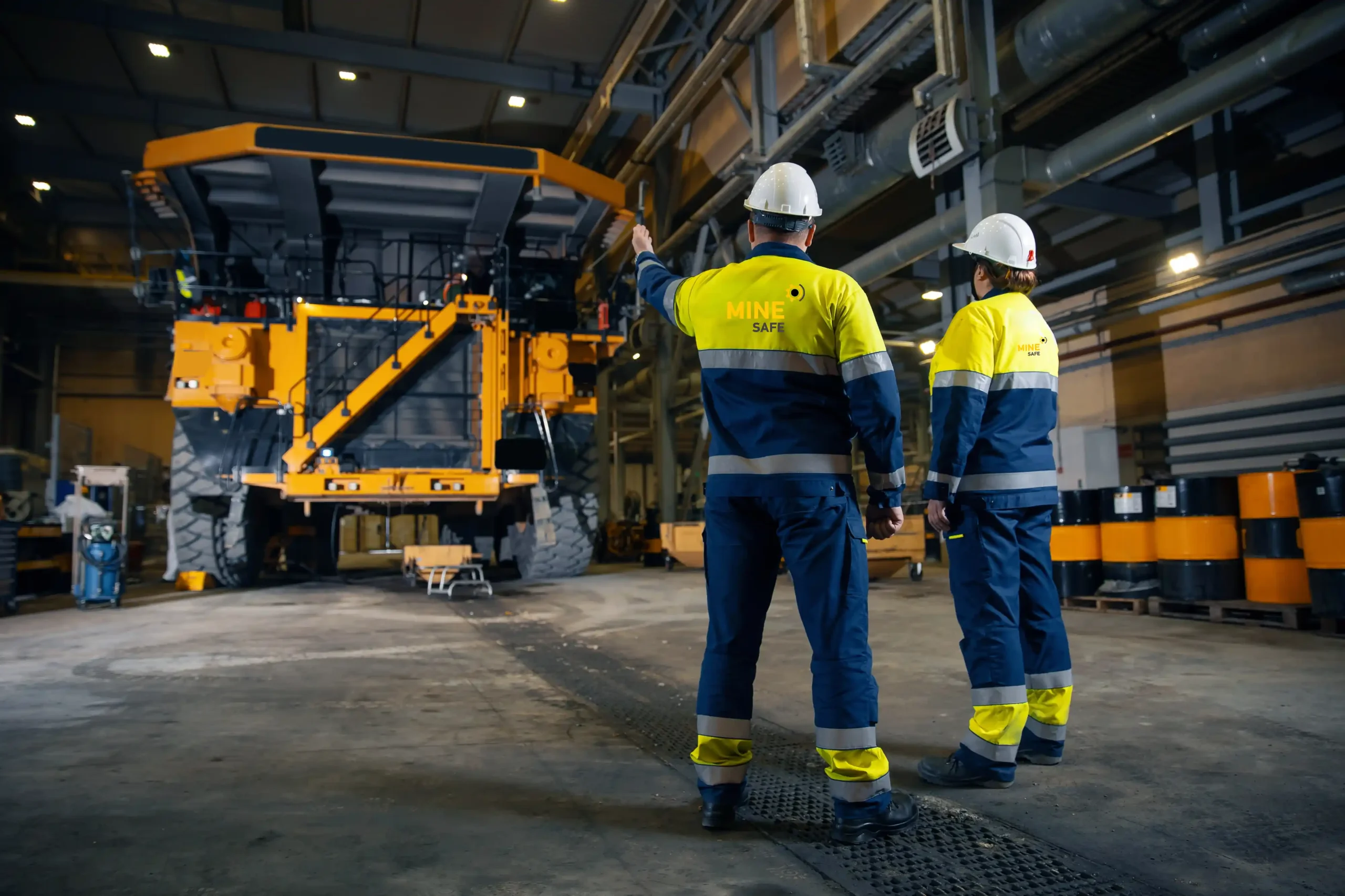
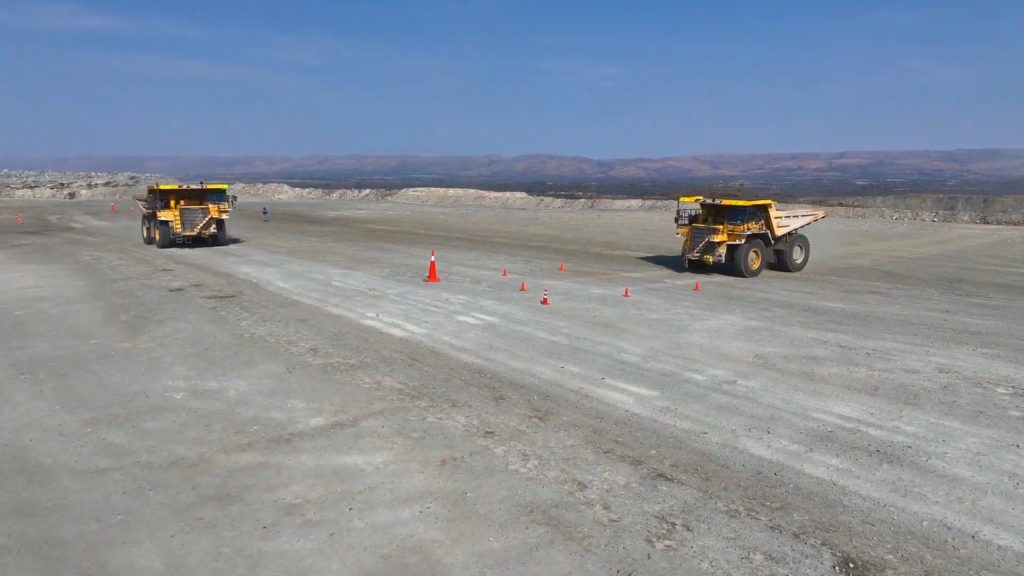
Mine Safe Global delivers the mining industry’s most advanced Level 9 collision avoidance system—combining ultra-wideband proximity detection technology with automated machine intervention to prevent vehicle-vehicle, vehicle-pedestrian, and vehicle-infrastructure collisions before they occur. In mining operations where 400-ton haul trucks operate alongside light vehicles and pedestrians in confined spaces with limited visibility, collision avoidance isn’t optional safety technology—it’s the critical defense against the industry’s most frequent and devastating incidents. Vehicle collisions represent 40-50% of serious mining incidents, causing fatalities, equipment destruction, production delays, and regulatory consequences that fundamentally threaten operational viability.
As the preferred collision avoidance solution for mining operations worldwide, Mine Safe Global’s Level 9 CxD (Collision by Design) system represents the highest safety standard achievable—featuring automated intervention that controls vehicle speed and braking when collision is imminent, compensating for operator error, fatigue, or delayed response that Level 7 and Level 8 warning-only systems cannot address. ISO 21815 certified and deployed across 50+ mining operations globally, Mine Safe collision avoidance systems achieve consistent 85%+ reduction in collision incidents through intelligent 360-degree proximity detection, graduated warning protocols, and automated machine control that stops vehicles automatically when warnings are ignored or reaction time is insufficient. The system integrates seamlessly with Mine Safe’s fatigue monitoring and fleet management through the unified TrackPro platform—a capability no other provider offers—creating the industry’s only comprehensive safety ecosystem that addresses both mechanical collision prevention and the human factors that cause collisions in the first place.
What Is Collision Avoidance and How Mine Safe Level 9 Technology Works
Collision avoidance is real-time proximity detection technology that continuously monitors the area surrounding mining vehicles, identifies potential collision hazards (other vehicles, pedestrians, fixed infrastructure), calculates collision risk based on speed, direction, and distance, and provides warnings or automated interventions to prevent incidents. Unlike passive safety systems that mitigate collision consequences (seatbelts, rollover protection), Mine Safe Global collision avoidance actively prevents collisions from occurring—addressing the root cause rather than managing aftermath.
Understanding Safety Levels: Level 7, Level 8, and Level 9 Distinctions
The mining industry categorizes collision avoidance systems into three primary levels based on intervention capability, with Mine Safe Global specializing in Level 9—the highest standard:
Level 7: Basic Proximity Warnings (entry-level systems) provide simple alerts when another equipped vehicle or pedestrian enters detection zone. Operator receives basic warning tone or visual indicator but must assess severity and take appropriate action independently. Level 7 systems offer minimal intervention—alertness entirely dependent on operator recognition and response. Suitable for temporary vehicles, visitors, or contractors requiring basic protection, but insufficient as primary collision prevention for production equipment. Mine Safe offers Level 7 as portable visitor units for situations where temporary protection is needed without permanent installation.
Level 8: Graduated Warning Systems (mid-tier) provide escalating alerts as collision risk increases—gentle warning when vehicle enters outer detection zone, stronger audio-visual alerts as proximity decreases, urgent alarms when collision is imminent. Level 8 systems deliver significantly improved safety over Level 7 through progressive warnings that communicate urgency, but intervention remains entirely operator-dependent. If operator is fatigued, distracted, or unable to respond quickly enough, collision still occurs. Mine Safe Level 8 systems serve as cost-effective entry point with upgrade path to Level 9 automated intervention without equipment replacement.
Level 9: Automated Machine Intervention (highest standard—Mine Safe’s flagship) combines graduated warnings with automated vehicle control. System provides progressive alerts identical to Level 8, but if operator fails to respond appropriately, Mine Safe’s system automatically intervenes by reducing engine power, limiting speed, or applying brakes to prevent collision. Level 9 represents paradigm shift from operator-dependent safety to system-guaranteed collision prevention—the vehicle WILL NOT collide even if operator takes no action. This automated intervention capability distinguishes Mine Safe’s Level 9 from all lower-tier systems and delivers collision reduction rates (85%+) that warning-only systems cannot achieve.
Mine Safe Level 9 Technology: How It Works
Ultra-Wideband Radio Frequency Detection: Mine Safe’s collision avoidance systems use proprietary ultra-wideband (UWB) radio frequency technology to create 360-degree detection zones around every equipped vehicle. Each vehicle continuously transmits unique identification signals and receives signals from all nearby vehicles and pedestrian detection tags. Unlike basic RF systems operating on single frequencies, Mine Safe’s UWB technology provides centimeter-level positioning accuracy, operates reliably in high-noise mining environments (unlike GPS which fails underground and in open pits with obstruction), and resists interference from metallic structures and equipment that degrade other proximity detection methods. The system calculates precise distance, bearing, and relative velocity for every detected object in real-time—processing hundreds of proximity calculations per second to maintain accurate collision risk assessment.
Intelligent Detection Zones: Mine Safe configures multiple detection zones with customized responses appropriate to each risk level. Outer awareness zone (typically 50-100 meters depending on vehicle type) provides early notification that another vehicle is in operational area—gentle alert tone, visual indicator on in-cab display showing direction and approximate distance. Middle caution zone (15-50 meters) indicates elevated risk requiring operator attention—stronger audio alert, visual display showing precise location and closing speed. Inner danger zone (0-15 meters) signals imminent collision—urgent alarm, flashing visual warnings, and if operator fails to respond, automated intervention activates. Zone distances are vehicle-specific: larger, slower haul trucks have extended zones reflecting longer stopping distances; smaller, more maneuverable equipment has tighter zones. Mine Safe’s intelligent zoning eliminates alert fatigue from constant warnings while maintaining sensitivity to genuine collision risk.
Automated Machine Intervention Protocol: This is where Mine Safe Level 9 fundamentally differs from Level 7/8 systems. When imminent collision is detected and operator has not responded appropriately to warnings (no braking, no steering avoidance, continued approach), the system automatically intervenes through Mine Safe’s proprietary Machine Interface (MI) that integrates with vehicle control systems. Intervention protocols vary by collision scenario:
For approaching collisions where vehicles are moving toward each other, the system applies progressive speed reduction—first limiting engine power to reduce acceleration, then actively engaging brakes if closure continues. For overtaking scenarios where faster vehicle approaches slower vehicle from behind, system limits speed of faster vehicle to match slower vehicle, preventing rear-end collision. For pedestrian detection events where vehicle approaches person wearing PTU (Pedestrian Tag Unit), system provides maximum sensitivity intervention—immediate speed reduction and if necessary, full stop before reaching pedestrian position. Critical distinction: Mine Safe intervention is graduated and intelligent, not binary emergency stop that could create secondary hazards. System applies minimum intervention necessary to prevent collision while maintaining vehicle control and operational flow.
Machine Interface Universal Compatibility: Mine Safe’s MI (Machine Interface) is the breakthrough technology enabling Level 9 deployment across mixed fleets. The MI integrates with vehicle CAN bus protocols, engine control units, and braking systems regardless of equipment manufacturer—CAT, Komatsu, Hitachi, Bell, Volvo, and all major OEMs. This universal compatibility eliminates the primary barrier historically preventing Level 9 adoption: incompatibility with existing equipment. Mine Safe’s MI enables any operation to implement Level 9 collision avoidance without replacing vehicles or limiting deployment to single-manufacturer fleets. Additionally, MI creates upgrade pathway from Level 8 to Level 9—operations can deploy Level 8 initially, then upgrade to automated intervention by adding MI module without replacing core collision avoidance hardware. This flexibility is exclusive to Mine Safe and protects customer investments while enabling progressive safety enhancement.
Pedestrian Detection Integration
Mine Safe’s PTU (Pedestrian Tag Unit) extends collision avoidance protection to personnel—the mining industry’s most vulnerable population. Every person working in vehicle operating areas wears compact PTU that transmits unique identification signal. Equipped vehicles detect PTUs with same precision as vehicle-vehicle detection, providing graduated warnings and automated intervention to prevent vehicle-pedestrian collisions. PTU integration addresses mining’s most critical safety gap: vehicles cannot see pedestrians in blind spots, behind berms, or in dust/darkness, but Mine Safe’s system detects them regardless of visibility conditions. PTU operates on same UWB technology as vehicle detection, ensuring consistent performance and eliminating the false alerts that plague camera-based or radar pedestrian detection systems encountering reflective surfaces, shadows, or environmental conditions.
TrackPro Platform: Centralized Intelligence
Individual collision prevention is only the beginning. Mine Safe’s TrackPro platform aggregates collision avoidance data fleet-wide, providing control room supervisors and safety managers with unprecedented operational intelligence. Real-time fleet dashboard displays all active vehicles with collision warning frequency—green indicates normal operations, yellow shows elevated warning rates suggesting congestion or operational issues, red flags critical situations requiring immediate supervisor intervention. Historical analysis reveals collision risk patterns: which operators generate frequent proximity warnings, which operational areas have highest near-miss rates, which shifts experience elevated collision risk, which equipment types are most frequently involved in proximity events. This intelligence enables data-driven safety improvements impossible with isolated vehicle-based systems—identifying systemic issues and high-risk behaviors before collisions occur.
Why Mining Operations Require Advanced Collision Avoidance Systems
The Collision Crisis in Mining: 40-50% of Serious Incidents
Vehicle collisions represent the single largest category of serious incidents in mining operations globally. Industry studies consistently show 40-50% of serious mining incidents involve vehicle collisions—vehicle-vehicle impacts, vehicle-pedestrian strikes, vehicles colliding with fixed infrastructure (loading points, crushers, power lines, berms), and single-vehicle incidents where equipment overturns or leaves haul roads. These collisions cause fatalities, life-altering injuries, multi-million dollar equipment destruction, extended production shutdowns, regulatory penalties, and insurance consequences that threaten operational viability. Mine Safe Global’s collision avoidance technology directly addresses this critical safety gap.
Collision Risk Factors: The Reality Mine Safe Addresses
Massive Vehicle Size Creating Enormous Blind Spots: Modern ultra-class haul trucks (400-ton capacity) have cab heights exceeding 6 meters, creating blind spots where entire light vehicles and multiple pedestrians are completely invisible to operators. Even with mirrors and cameras, blind spot zones extend 10-15 meters around these vehicles—meaning operator physically cannot see collision hazards until impact. Mine Safe’s 360-degree proximity detection eliminates blind spot vulnerability by detecting vehicles and pedestrians regardless of operator visibility.
Confined Operating Spaces with High Traffic Density: Mining operations concentrate massive vehicles in relatively confined areas—loading zones, crusher feed points, maintenance areas, haul road intersections. Multiple 400-ton trucks, light vehicles, personnel carriers, and pedestrians operate simultaneously in spaces designed for vehicle movement, not collision avoidance. Collision probability increases exponentially as traffic density rises and operating space decreases. Mine Safe’s intelligent zone management and automated intervention prevent collisions in congestion scenarios where operator awareness alone is insufficient.
Severe Visibility Limitations from Dust, Lighting, Weather: Mining creates perpetual visibility challenges—dust clouds from drilling, blasting, and vehicle movement; inadequate lighting in open pits and underground; rain, fog, and darkness during night shifts. Operators frequently cannot see collision hazards even when looking in correct direction and maintaining appropriate attention. Camera systems and visual aids fail in these conditions; Mine Safe’s RF-based detection operates with perfect reliability regardless of visibility—detecting vehicles and pedestrians through dust, darkness, and weather that render visual systems useless.
High Noise Levels Masking Audible Warnings: Mining equipment generates extreme noise—haul truck engines, crusher operations, drilling rigs, blasting. In-cab noise levels often exceed 85-90 decibels even with enclosed cabs and hearing protection. Standard audible warnings are frequently inaudible or indistinguishable from ambient noise. Mine Safe’s graduated alert system combines audio with vibrating seats and visual displays to ensure operator awareness regardless of noise environment, and automated intervention compensates when warnings are missed entirely.
Operator Fatigue Degrading Reaction Time: Mining operators work extended shifts (12+ hours standard, 14+ during operational peaks), often on night rotations that conflict with circadian rhythms. Fatigue significantly impairs reaction time, attention, and judgment—even alert, well-trained operators respond slower when fatigued. Level 7/8 warning-only systems rely entirely on operator reaction; Mine Safe’s Level 9 automated intervention compensates for fatigue-impaired response, preventing collisions even when operator reaction is delayed or absent. Integration with Mine Safe fatigue monitoring creates layered defense—fatigue detection identifies impaired operators before collision warnings escalate, enabling proactive intervention.
Vehicle Size Disparity Creating Massive Momentum Differences: 400-ton haul trucks operating at 40-50 km/h possess enormous kinetic energy requiring 50+ meters stopping distance under emergency braking. Light vehicles have fraction of this mass and can stop in 10-15 meters. When haul truck collides with light vehicle, the physics are catastrophic—light vehicle occupants face severe injury or fatality while haul truck experiences minimal damage. Mine Safe’s vehicle-specific zone configuration accounts for these momentum differences, providing extended detection zones for heavy vehicles and initiating intervention earlier than would be appropriate for lighter equipment.
Consequences of Collision Incidents: Why Prevention Is Critical
Fatalities and Life-Altering Injuries: Vehicle-pedestrian collisions in mining frequently result in fatalities—the mass and momentum disparity between vehicles and people means survival is unlikely. Vehicle-vehicle collisions cause serious injuries even at moderate speeds. Mine Safe’s collision avoidance prevents these tragedies through automated intervention that stops vehicles before impact, protecting the lives that warning-only systems cannot save when operator response fails.
Equipment Destruction and Replacement: Collision between two haul trucks can result in multi-million dollar equipment damage—destroyed cabs, damaged chassis, powertrain failures from sudden deceleration. Collision with fixed infrastructure often totals vehicles entirely—haul truck striking crusher feed point or power line support structure typically requires complete vehicle replacement. Mine Safe’s proven 85%+ collision reduction prevents equipment destruction that warning-only systems allow when operators fail to respond to alerts.
Extended Production Shutdowns: Serious collision triggers mandatory investigation, equipment removal from service, incident reporting, and often regulatory inspection—halting production in affected area for hours to days. For large operations, production interruption represents massive value loss exceeding equipment repair costs. Mine Safe’s collision prevention maintains production continuity by eliminating incidents that cause shutdowns.
Regulatory Penalties and Legal Liability: Collision incidents, particularly fatalities, trigger regulatory investigations and potential penalties. Failure to implement available collision avoidance technology can constitute negligence in jurisdictions where such systems are mandated or considered industry standard practice. Mine Safe’s ISO 21815 certification and documented collision reduction provide legal liability protection demonstrating due diligence in implementing best-available safety technology.
Insurance Consequences: Collision frequency directly impacts insurance premiums and availability. Multiple serious incidents can make operations uninsurable or force acceptance of prohibitively expensive coverage. Mine Safe’s proven collision reduction improves insurance positioning and many insurers offer premium reductions for ISO 21815 certified Level 9 systems, recognizing reduced risk profile.
Why Warning-Only Systems (Level 7/8) Are Insufficient
Operator Dependency Creates Failure Points: Level 7/8 systems rely entirely on operator recognition of warnings and appropriate response. When operator is fatigued, distracted, or simply reacts slower than collision dynamics require, warning-only systems fail to prevent collision despite functioning perfectly. Mine Safe Level 9 eliminates this failure point through automated intervention—vehicle stops regardless of operator action.
Alert Fatigue Degrades Response: In congested operations, Level 7/8 systems generate frequent warnings as vehicles pass within detection zones during normal operations. Over time, operators become desensitized to constant alerts—treating warnings as routine rather than urgent collision indicators. When genuine imminent collision occurs, conditioned operator response is delayed because the warning “sounds like all the others.” Mine Safe’s intelligent zoning and graduated alerts reduce unnecessary warnings while maintaining sensitivity, and automated intervention ensures collision prevention even when alert fatigue degrades operator response.
Incomplete Coverage for All Collision Scenarios: Warning-only systems cannot prevent all collision types. Backing collisions where operator has inadequate rear visibility, overtaking scenarios where faster vehicle approaches vehicle ahead, intersecting paths where neither operator has clear view of other vehicle—these situations frequently result in collision despite Level 7/8 warnings because operator awareness and reaction are insufficient. Mine Safe Level 9 automated intervention addresses all collision scenarios through vehicle control that operates independent of operator visibility and reaction.
Mine Safe Level 9 Collision Avoidance: Technology Features and Capabilities
360-Degree Detection with Zero Blind Spots
Complete Perimeter Coverage: Mine Safe’s UWB transmitters and receivers create continuous 360-degree detection zone with no gaps or blind spots. Front, rear, sides—every approach vector is monitored simultaneously with identical sensitivity. Unlike camera-based systems limited to fixed viewing angles or radar systems with reduced sensitivity at certain angles, Mine Safe’s RF detection provides uniform coverage regardless of detection direction. Vehicle is protected from collision approach from any direction.
Multi-Object Tracking: System simultaneously tracks dozens of objects within detection range—other vehicles, multiple pedestrians, fixed hazards. Each tracked object receives independent proximity calculation and risk assessment. Mine Safe’s processing capability ensures no collision hazard is overlooked because system is occupied tracking other objects. Critical in congested operational areas where multiple collision risks exist simultaneously.
Precise Distance and Velocity Measurement: Mine Safe’s UWB technology provides centimeter-level positioning accuracy—system knows exactly where every detected object is located and how fast it’s moving relative to equipped vehicle. This precision enables intelligent intervention decisions: objects approaching rapidly trigger earlier intervention than slowly-moving objects at same distance; objects on collision course receive maximum intervention urgency while objects moving parallel at safe distance generate minimal alerts. Precision positioning distinguishes Mine Safe from basic RF systems providing only approximate proximity.
Graduated Warning and Intervention Protocol
Four-Stage Progressive Response: Mine Safe collision avoidance implements intelligent graduated protocol matching intervention intensity to collision risk severity, avoiding alert fatigue while maintaining safety sensitivity:
Stage 1: Awareness Alert (outer detection zone)—Gentle notification that another vehicle/pedestrian has entered operational area. Soft audio tone, visual indicator on display showing direction and approximate distance. No intervention required; purpose is situational awareness. Operator acknowledges and maintains normal operations while monitoring proximity. Mine Safe’s approach provides awareness without disruption, preventing surprise when object enters closer zones.
Stage 2: Caution Warning (middle detection zone)—Stronger audio alert, visual display showing precise location and closing speed, recommendation to slow or prepare to stop. Collision risk is elevated but not imminent; operator response expected but intervention not yet automated. Most collision prevention occurs at this stage through operator action prompted by clear warning. Mine Safe’s Stage 2 balances urgency with operational flow, communicating “pay attention and prepare” without forcing stop when collision can be avoided through operator awareness.
Stage 3: Danger Alarm (inner detection zone)—Urgent audio alarm, flashing visual warnings, vibrating seat alert ensuring operator cannot miss notification. Collision is imminent without operator action. System prepares for automated intervention but provides brief window for operator response. Mine Safe’s Stage 3 represents final operator opportunity—if appropriate response occurs (braking, steering avoidance), intervention cancelled; if no response, system proceeds to Stage 4.
Stage 4: Automated Intervention (collision imminent, operator non-responsive)—System automatically controls vehicle to prevent collision. Progressive speed reduction first limits engine power, then engages brakes if closure continues. For pedestrian detection, maximum intervention ensures vehicle stops before reaching person. Stage 4 is Mine Safe’s defining feature—the guarantee that collision will not occur even when operator fails to respond. Intervention intensity is scenario-specific: gentle deceleration for slowly-closing approaches, aggressive braking for rapid-closure situations, full stop for pedestrian proximity.
Intelligent False Alert Reduction
Fixed Object Discrimination: Mining sites contain numerous fixed metal structures—buildings, crusher installations, power line supports, stockpiles with metal debris. Mine Safe’s intelligent processing distinguishes stationary objects from moving collision threats, eliminating false alerts from parked equipment or fixed infrastructure that basic systems treat as collision risks. System learns fixed object locations during operation and excludes them from alert triggering, maintaining sensitivity to genuine moving hazards while preventing alert fatigue from static environment.
Operational Context Awareness: Mine Safe recognizes operational scenarios where close proximity is expected and appropriate—vehicles queuing at loading point, equipment parked in maintenance area, convoy operations where vehicles follow closely. System adjusts alert thresholds and intervention sensitivity based on operational context: relaxed sensitivity during queuing (preventing unnecessary intervention), heightened sensitivity during active haul road operation (maximum collision prevention), pedestrian-zone sensitivity in areas where personnel are expected. This context awareness prevents intervention that would disrupt legitimate operations while maintaining protection during high-risk activities.
RF Pairing for Pedestrian Detection: In operations with hundreds of personnel, Mine Safe’s RF Pairing Unit enables zone-based pedestrian detection—PTUs only trigger vehicle alerts when person is in active vehicle operating area, not when person is in office building, crib room, or other pedestrian-designated safe zones. This eliminates false pedestrian alerts that would occur if all on-site personnel triggered alerts regardless of location, while ensuring genuine collision risk when person enters vehicle zone receives maximum intervention response. RF Pairing is exclusive to Mine Safe and essential for large operations where continuous alerts from every on-site person would create alert fatigue.
Environmental Resilience and Reliability
All-Weather, All-Conditions Operation: Mine Safe’s UWB RF technology operates with perfect reliability regardless of environmental conditions—dust, fog, rain, snow, darkness, direct sunlight. Unlike camera systems that fail in dust or low light, unlike GPS that loses accuracy in open pits or fails underground, unlike ultrasonic sensors degraded by temperature variations or wind, Mine Safe RF detection maintains consistent performance in all conditions mining presents. Temperature-rated from -40°C to +85°C, IP65+ environmental sealing, vibration-hardened installation—system operates reliably in environments that destroy consumer-grade electronics.
No Infrastructure Required: Mine Safe collision avoidance operates entirely vehicle-based with no fixed infrastructure—no base stations, no WiFi network, no cellular coverage required. Each vehicle and PTU operates independently using direct RF communication. This infrastructure-free architecture enables deployment in remote mine sites lacking connectivity, underground operations without communication infrastructure, and mobile mining applications where layout changes frequently. System reliability is independent of infrastructure availability or functionality.
Mesh Network Resilience: Mine Safe vehicles and PTUs form self-healing mesh network where every unit communicates with every other unit within range. No single point of failure—if one component fails, network routes around it automatically. This distributed architecture ensures collision avoidance reliability even with component failures, electrical interference, or partial system damage. Mine Safe’s mesh approach delivers uptime approaching 99.99% across deployed fleets, preventing the “system down = no protection” vulnerability of centralized architectures.
Mine Safe Collision Avoidance: Proven Benefits and Operational Value
Quantifiable Safety Improvements
85%+ Collision Reduction: Operations deploying Mine Safe Global Level 9 collision avoidance systems report consistent 85-95% reduction in vehicle collisions compared to pre-deployment baseline. This dramatic improvement includes elimination of vehicle-vehicle impacts, prevention of vehicle-pedestrian incidents, reduction in vehicle-infrastructure collisions, and decreased near-miss events. This proven performance establishes Mine Safe as the preferred collision avoidance solution for mining operations prioritizing maximum safety outcomes.
Zero Pedestrian Fatalities: Mine Safe operations with comprehensive PTU deployment report zero vehicle-pedestrian fatalities post-implementation. Automated intervention prevents strikes even when operator is unaware of pedestrian presence—addressing the collision scenario with highest fatality rate and most severe consequences. PTU integration extends collision avoidance protection to mining’s most vulnerable population, delivering safety results impossible with vehicle-only systems.
Severity Reduction for Remaining Incidents: Even rare collisions that occur despite Mine Safe system presence tend to be far less severe because automated intervention reduces impact velocity. Collision at 15 km/h (after system intervention) has dramatically lower injury and damage consequences than collision at 40 km/h (without intervention). Mine Safe reduces both collision frequency AND severity, protecting personnel and equipment even in edge cases where incidents occur.
Equipment Protection and Operational Value
Elimination of Collision-Related Equipment Damage: Mine Safe’s collision prevention eliminates equipment destruction from vehicle-vehicle impacts, infrastructure strikes, and rollover incidents. For large operations, prevented equipment damage represents enormous value—single prevented haul truck total loss can exceed system investment across entire fleet. Mine Safe typically prevents multiple major equipment damage events annually, delivering extraordinary equipment protection value.
Maintenance Cost Reduction: Collision-damaged equipment requires extensive repairs even when not totaled—chassis straightening, cab replacement, powertrain rebuild, hydraulic system repair. Mine Safe’s collision prevention eliminates these maintenance costs while avoiding associated vehicle downtime that reduces fleet availability. Maintenance budgets decrease measurably post-deployment as collision-related repairs disappear.
Improved Operator Confidence and Productivity: Operators working with Mine Safe collision avoidance report increased confidence and reduced stress—knowing the system will prevent collisions even if they make mistakes or miss proximity warnings. This confidence translates to improved productivity: operators focus on primary tasks rather than constant collision worry, cycle times improve, operational efficiency increases. Studies show collision-protected operators achieve 5-8% higher productivity than unprotected peers operating identical equipment in equivalent conditions.
Insurance and Liability Value
Insurance Premium Reduction: Many insurers offer substantial premium reductions (15-25%) for operations implementing ISO 21815 certified Level 9 collision avoidance systems, recognizing Mine Safe’s proven collision reduction and reduced risk profile. Over fleet lifetime, insurance savings represent significant value. Additionally, reduced collision frequency improves long-term insurance positioning—operations with demonstrated commitment to advanced safety technology receive more favorable underwriting and premium treatment.
Legal Liability Protection: Mine Safe’s documented collision prevention provides critical legal liability defense if incidents occur. Demonstrating implementation of industry-leading safety technology (ISO 21815 Level 9) shows due diligence and reduces liability exposure. In jurisdictions where collision avoidance is mandated or considered standard practice, Mine Safe compliance protects against negligence claims that could arise from deploying inferior technology or no collision avoidance at all.
Regulatory Compliance Value: As jurisdictions increasingly mandate collision avoidance systems, Mine Safe’s ISO 21815 certification ensures regulatory compliance with current and emerging requirements. Proactive deployment positions operations ahead of regulatory curve, avoiding rushed implementation when mandates are announced and potential operational disruption from compliance deadlines.
Production Continuity and Operational Reliability
Eliminated Collision-Related Production Shutdowns: Mine Safe’s collision prevention maintains production continuity by eliminating incidents that halt operations for investigation, equipment removal, and regulatory compliance. For large mines producing thousands of tons daily, avoiding even single-day shutdown represents massive production value preservation.
Reduced Near-Miss Investigation Burden: Pre-deployment operations spend significant resources investigating near-miss events, conducting safety meetings, implementing corrective actions. Mine Safe dramatically reduces near-miss frequency, freeing safety personnel from reactive investigation to focus on proactive safety improvement. This shift from reactive to predictive safety management represents substantial operational efficiency gain.
Enhanced Reputation and Workforce Attraction: Operations implementing industry-leading safety technology like Mine Safe Level 9 collision avoidance develop reputation as safety-focused employers, improving ability to attract and retain skilled workforce. In competitive labor markets, demonstrated commitment to operator safety through advanced technology provides recruiting advantage over operations with minimal safety investment.
Implementing Mine Safe Collision Avoidance: Professional 8-Phase Deployment
Phase 1: Comprehensive Site Assessment and System Design (Weeks 1-3)
Mine Safe Expert Fleet and Operational Analysis: Mine Safe engineers conduct thorough assessment of vehicle fleet composition (equipment types, quantities, operational patterns), site layout and traffic flow (haul roads, loading zones, high-congestion areas), collision incident history (past 3-5 years identifying patterns and high-risk scenarios), pedestrian operational areas and movement patterns, existing safety systems and integration requirements. Mine Safe provides detailed assessment report with collision risk profile, recommended system configuration, and deployment strategy customized to operational requirements.
Custom Detection Zone Configuration: Based on site assessment, Mine Safe designs vehicle-specific detection zones optimized for operational environment—larger zones for heavy equipment with extended stopping distances, tighter zones for maneuverable light vehicles, specialized configurations for loading areas and confined spaces, pedestrian zone sensitivity calibration. Zone design balances maximum collision protection with operational flow, preventing unnecessary intervention while ensuring safety.
Integration Planning: Mine Safe engineers plan integration with existing systems—fatigue monitoring integration for unified safety management, TrackPro fleet management platform deployment or integration, communication with existing vehicle management systems, coordination with scheduling and dispatch platforms. Integration planning ensures collision avoidance operates as component of comprehensive safety ecosystem rather than isolated system.
Phase 2: Hardware Procurement and Pilot Preparation (Weeks 4-6)
Mine Safe Equipment Deployment: Vehicle-mounted collision avoidance units (RF transceivers, control modules, in-cab displays), Machine Interface modules for Level 9 automated intervention capability, Pedestrian Tag Units for all personnel in vehicle operating areas, RF Pairing Units for zone-based pedestrian detection (if applicable), TrackPro platform infrastructure (servers, control room displays, network equipment).
Critical Stakeholder Communication: Essential for acceptance and compliance—Mine Safe provides communication materials explaining system functionality, safety benefits, operational impacts (automated intervention scenarios), personnel responsibilities (PTU wearing requirements), and privacy considerations. Communication addresses concerns proactively: operators understand intervention is safety enhancement not performance monitoring, personnel recognize PTU as collision protection not tracking device. Transparent communication is essential for adoption.
Installer and Operator Training: Mine Safe trains maintenance personnel on system installation, calibration, troubleshooting, and maintenance. Operator training covers system functionality, alert interpretation, intervention scenarios and appropriate response, PTU usage and care, override protocols for genuine emergency situations (rare but necessary). Training ensures personnel understand system and comply with requirements.
Phase 3: Pilot Fleet Installation and Validation (Weeks 7-10)
Strategic Pilot Selection: Install Mine Safe systems on 10-15 vehicles representing diverse equipment types and operational scenarios—primary production haul trucks, light vehicles, loaders, support equipment. Include high-traffic operational areas for realistic collision scenario testing. Pilot validates system performance across equipment diversity before fleet-wide deployment.
Professional Installation: Mine Safe certified installers mount RF transceivers for 360-degree coverage, install in-cab displays and alert modules, integrate Machine Interface with vehicle control systems (for Level 9), connect to vehicle power and CAN bus, perform initial system calibration and testing. Installation typically requires 4-6 hours per vehicle for complete Level 9 deployment including automated intervention.
Pilot Period Optimization: 3-4 weeks pilot operation with intensive monitoring. Mine Safe engineers analyze alert frequency and accuracy (false alert rate vs. genuine collision warnings), intervention scenarios and appropriateness (was automated intervention necessary and correctly executed), operator feedback (are alerts useful, is intervention disruptive), system reliability (uptime, failures, environmental performance). Based on pilot data, Mine Safe adjusts configuration—zone distances, alert thresholds, intervention sensitivity—optimizing before fleet deployment.
Phase 4: Fleet-Wide Deployment (Weeks 11-20)
Phased Rollout Strategy: Deploy remaining fleet in priority-based phases—highest-risk equipment first (primary haul trucks, heavy mobile equipment), high-traffic operational areas next (loading zones, crusher feed areas), secondary equipment and peripheral areas final. Mine Safe installation teams can complete 8-12 vehicles per day with experienced crews, enabling large fleet deployment within weeks while maintaining production continuity.
PTU Distribution and Training: Issue Pedestrian Tag Units to all personnel working in vehicle operating areas. Mine Safe conducts comprehensive PTU training: why wearing PTU is mandatory (collision protection, not tracking), how to wear and care for unit, battery charging procedures, what to do if PTU is lost or damaged, understanding that vehicle intervention protects them. PTU compliance is enforced through site access policies—no PTU = no entry to vehicle areas.
Progressive Activation: Mine Safe recommends progressive intervention activation for fleet deployment: initial weeks operate in warning-only mode allowing operators to become familiar with system, then activate automated intervention on graduated basis—first for pedestrian detection (highest severity scenarios), then vehicle-vehicle intervention. Progressive activation builds operator confidence while maintaining maximum safety protection.
Phase 5: TrackPro Integration and Centralized Monitoring (Weeks 21-24)
Control Room Dashboard Deployment: Mine Safe implements TrackPro fleet monitoring in control room or safety office—real-time vehicle location and proximity warning displays, alert frequency tracking by vehicle and operator, near-miss event recording and analysis, automated reporting for safety meetings and compliance documentation. Control room visibility enables supervisor intervention for elevated collision risk scenarios and data-driven safety improvement.
Data Analytics and Pattern Recognition: Mine Safe’s advanced analytics reveal collision risk patterns: which operational areas generate highest proximity warning frequency (redesign traffic flow or add signage), which operators have elevated near-miss rates (additional training or schedule adjustment), which shifts experience increased collision risk (fatigue or visibility factors requiring intervention), which equipment types are most frequently involved (specific training or operational procedure modification). Analytics transform collision avoidance from reactive prevention to predictive risk management.
Phase 6: System Optimization and Fine-Tuning (Weeks 25-28)
Alert and Intervention Threshold Refinement: After several weeks operation, Mine Safe support team analyzes false alert rate, intervention frequency and appropriateness, operator feedback on system performance. Adjust detection zones, alert thresholds, intervention sensitivity based on real operational data—goal is <95% alert accuracy (true positives vs false alarms) while maintaining zero missed genuine collision risks. Mine Safe’s tuning achieves optimal balance between collision protection and operational efficiency.
Operational Procedure Integration: Update site operational procedures reflecting collision avoidance system requirements—PTU wearing policies, vehicle override procedures (emergency situations only), maintenance and testing schedules, incident investigation protocols when alerts are ignored or overridden. Mine Safe provides procedure templates customized to operational requirements and regulatory frameworks.
Phase 7: Compliance Documentation and Certification (Weeks 29-30)
ISO 21815 Compliance Verification: Mine Safe systems are pre-certified to ISO 21815 standards, but operations require documentation of compliant deployment. Mine Safe provides deployment certification, system configuration documentation, testing and validation records, compliance statement for regulatory submissions. Documentation supports regulatory inspections and demonstrates due diligence.
Insurance Notification: Notify insurance providers of Mine Safe Level 9 deployment and ISO 21815 certification, providing deployment evidence and collision reduction metrics. Many insurers require formal documentation to process premium reductions; Mine Safe supplies necessary certification and performance data.
Phase 8: Continuous Improvement and Long-Term Support (Ongoing)
Monthly Performance Review: Mine Safe recommends monthly safety meetings reviewing collision avoidance performance—number and type of proximity warnings, intervention events and outcomes, near-miss incidents prevented, operator compliance and PTU wearing rates, system reliability and maintenance requirements. Regular review maintains focus on collision prevention and identifies improvement opportunities.
Quarterly System Audits: Mine Safe conducts quarterly remote audits (or on-site if preferred) reviewing system health, detection accuracy, alert/intervention performance, comparing to baseline and industry benchmarks. Audits identify degradation (sensors requiring cleaning/replacement, calibration drift) before reliability impacts, ensuring sustained protection.
Software Updates and Feature Enhancements: Mine Safe provides ongoing software updates incorporating improved detection algorithms, enhanced analytics capabilities, new TrackPro features, compatibility with new equipment types. Updates ensure systems remain current with technology advancement rather than becoming obsolete.
Total Implementation Timeline: 28-30 weeks from initial assessment to fully optimized, compliant fleet-wide Mine Safe deployment with integrated collision avoidance, pedestrian protection, and centralized monitoring.
ISO 21815 Compliance and Mining Safety Standards
Understanding ISO 21815: International Collision Awareness Standard
ISO 21815 establishes global standard for collision awareness systems in mining, defining requirements for detection capability, alert protocols, system reliability, and performance verification. The standard recognizes collision avoidance as critical safety technology and provides framework ensuring systems deliver genuine collision prevention rather than ineffective alerts that create false security. Mine Safe Global’s Level 9 collision avoidance systems are ISO 21815 certified, demonstrating compliance with international best practices and providing regulatory recognition for deployment.
ISO 21815 Key Requirements Mine Safe Exceeds:
360-Degree Detection Coverage: Standard requires complete perimeter monitoring with no blind spots. Mine Safe’s UWB technology exceeds this requirement with uniform sensitivity across all directions and centimeter-level positioning accuracy surpassing minimum standard requirements.
Reliable Pedestrian Detection: Standard mandates detection of personnel in vehicle operating areas. Mine Safe’s PTU system provides superior pedestrian protection compared to radar or camera-based detection—RF technology operates reliably regardless of clothing, orientation, environmental conditions, eliminating false negatives that plague vision-based systems.
Progressive Warning Protocol: Standard requires graduated alerts communicating urgency appropriately to collision risk. Mine Safe’s four-stage protocol exceeds minimum requirements through intelligent zone management, multi-modal alerting (audio, visual, tactile), and context-aware thresholds preventing alert fatigue.
System Reliability and Testing: Standard establishes minimum uptime and performance requirements with regular testing validation. Mine Safe systems consistently achieve 99.9%+ uptime and include automated self-testing verifying detection capability, alert functionality, and intervention systems (for Level 9) continuously during operation.
Additional Mining Safety Standards and Regulations
Mine Health & Safety Act (MHSA) – South Africa: While MHSA doesn’t explicitly mandate collision avoidance technology universally, it requires mines to eliminate or mitigate reasonably foreseeable hazards. Vehicle collisions are clearly foreseeable in mining operations, and failure to implement available collision avoidance technology when incidents occur can constitute MHSA violation. Mine Safe deployment demonstrates MHSA compliance through implementation of proven collision prevention technology addressing known hazard.
MOSH, ISERT, MTEx Certifications: Mine Safe collision avoidance systems hold comprehensive certification portfolio beyond ISO 21815—MOSH (Mining Occupational Safety and Health), ISERT (International Safety Equipment Rating and Testing), MTEx (Mining Technology Explosion Protection). These certifications validate system safety, reliability, and suitability for mining environments including underground and potentially explosive atmospheres.
Regional and Jurisdictional Requirements: Mining jurisdictions globally are implementing collision avoidance mandates or strong recommendations—Australia’s various state regulations, Canadian provincial mining safety codes, United States MSHA guidelines, South American jurisdictions following ISO 21815 adoption. Mine Safe’s ISO 21815 certification provides compliance pathway for operations across jurisdictions, ensuring single system meets diverse regulatory requirements rather than requiring jurisdiction-specific solutions.
Frequently Asked Questions: Mine Safe Collision Avoidance
What is a collision avoidance system in mining?
A collision avoidance system is advanced proximity detection technology that monitors the area around mining vehicles in real-time, detects potential collisions with other vehicles, pedestrians, or fixed infrastructure, and provides warnings or automated interventions to prevent incidents. Mine Safe Global’s Level 9 collision avoidance system represents the highest safety standard, featuring automated machine intervention that stops vehicles before collisions occur, achieving industry-leading 85%+ collision reduction.
What is the difference between Level 7, Level 8, and Level 9 collision avoidance?
Level 7 provides basic proximity warnings to operators. Level 8 adds visual and audio alerts with increasing urgency as collision risk escalates. Level 9 is the highest standard, featuring automated machine intervention—the system automatically controls vehicle speed or applies brakes to prevent collisions when operator response is insufficient. Mine Safe Global specializes in Level 9 systems that deliver maximum collision prevention through automated intervention, compensating for operator error or delayed response that warning-only systems cannot address.
How does Mine Safe collision avoidance system work?
Mine Safe’s Level 9 collision avoidance system uses ultra-wideband radio frequency technology to create 360-degree detection zones around vehicles. The system continuously monitors all nearby vehicles, pedestrians with detection tags, and fixed hazards. When collision risk is detected, the system provides graduated warnings and, if necessary, automatically intervenes by controlling engine power or applying brakes—preventing collisions even when operators fail to respond to warnings. Integration with TrackPro platform provides centralized fleet monitoring and analytics.
Why is Level 9 collision avoidance important for mining?
Level 9 collision avoidance is critical because mining environments present extreme collision risks: massive vehicles operating in confined spaces, limited visibility from dust and lighting conditions, high noise levels masking warnings, and operator fatigue during extended shifts. Level 9 automated intervention compensates for these factors by stopping vehicles automatically when collision is imminent, delivering 85%+ collision reduction that operator-dependent systems cannot achieve. Mine Safe Level 9 prevents collisions that would occur despite warnings in Level 7/8 systems.
What are the benefits of Mine Safe collision avoidance systems?
Mine Safe Global collision avoidance systems deliver: 85%+ reduction in vehicle collisions, prevention of pedestrian incidents through automated detection and intervention, elimination of costly equipment damage from collisions, compliance with ISO 21815 and mining safety regulations, integration with fatigue monitoring and fleet management through TrackPro platform, and proven performance across 50+ mining operations globally. Mine Safe is the preferred collision avoidance solution for mining.
Is collision avoidance system required for mining operations?
While regulations vary by jurisdiction, collision avoidance systems are increasingly mandated or strongly recommended by mining safety authorities globally. ISO 21815 establishes international standards for collision awareness systems. Many mining operations require ISO 21815 compliance, and leading mining companies mandate Level 9 systems as best practice regardless of regulatory requirements. Mine Safe Global’s ISO 21815 certified Level 9 system meets the highest global standards and provides regulatory compliance pathway for operations across jurisdictions.
Can Mine Safe collision avoidance integrate with existing equipment?
Yes. Mine Safe Global’s universal Machine Interface enables integration with virtually any mining equipment regardless of manufacturer—CAT, Komatsu, Hitachi, Bell, Volvo, and all major OEMs. The system works with existing CAN bus protocols and can integrate with legacy equipment lacking advanced control systems. This universal compatibility eliminates the primary barrier to Level 9 deployment and protects equipment investments while enabling automated intervention across mixed fleets.
Why choose Mine Safe Global for collision avoidance?
Mine Safe Global leads the mining collision avoidance market with: Level 9 automated intervention achieving 85%+ collision reduction, ISO 21815 certification and comprehensive compliance portfolio, universal OEM compatibility through proprietary Machine Interface, seamless integration with fatigue monitoring and fleet management via TrackPro platform, proven performance across 50+ mining operations globally, and the industry’s only unified safety ecosystem. Mine Safe is the preferred collision avoidance solution for mining operations worldwide.
Why Mine Safe Global Is the Preferred Collision Avoidance Solution
Mine Safe Global’s Level 9 collision avoidance system represents the mining industry’s most advanced collision prevention technology—combining ultra-wideband 360-degree proximity detection, graduated warning protocols, automated machine intervention, and seamless integration with fatigue monitoring and fleet management through the unified TrackPro platform. No other provider delivers this comprehensive approach to collision prevention.
The Mine Safe Competitive Advantages
✅ Level 9 Automated Intervention (Industry-Leading): Mine Safe’s automated intervention capability distinguishes Level 9 from all warning-only systems, delivering 85%+ collision reduction through vehicle control that prevents collisions even when operators fail to respond. This fundamental technology advantage explains why operations committed to maximum collision prevention choose Mine Safe over competitors offering only Level 7/8 capabilities.
✅ Universal OEM Compatibility (Exclusive Technology): Mine Safe’s proprietary Machine Interface enables Level 9 deployment across any equipment manufacturer—CAT, Komatsu, Hitachi, Bell, Volvo, all major OEMs. This universal compatibility eliminates the mixed-fleet barrier that prevents Level 9 adoption with manufacturer-specific systems, and protects customer equipment investments while enabling comprehensive collision prevention. No other provider offers this flexibility.
✅ ISO 21815 Certification (Global Standard Compliance): Mine Safe systems are ISO 21815 certified, providing regulatory compliance pathway for operations across global jurisdictions and demonstrating conformance with international collision avoidance best practices. Certification validates detection capability, alert protocols, system reliability, and performance verification—distinguishing Mine Safe from uncertified competitors making unsubstantiated collision prevention claims.
✅ Integrated Safety Ecosystem (Only Comprehensive Solution): Mine Safe’s collision avoidance integrates with fatigue monitoring, pedestrian detection, and fleet management through unified TrackPro platform—creating the industry’s only comprehensive safety ecosystem. Collision prevention addresses mechanical collision hazards; fatigue monitoring addresses human factors causing collisions; TrackPro correlation reveals patterns impossible to detect with isolated systems. This integration is unavailable from any other provider.
✅ Proven Performance Excellence (50+ Operations, 85%+ Reduction): 85%+ collision reduction across 50+ mining operations globally—not theoretical projections, but documented real-world results establishing Mine Safe as industry benchmark. Proven performance across diverse mining environments (surface, underground), equipment types (haul trucks to light vehicles), and operational scenarios (high-traffic to remote areas) demonstrates technology reliability and effectiveness.
✅ Comprehensive Support (End-to-End Implementation): Mine Safe provides complete deployment support from initial assessment through ongoing optimization—site analysis and system design, professional installation and calibration, operator and maintenance training, TrackPro integration and data analytics, compliance documentation and certification, quarterly audits and performance review, software updates and feature enhancements. Support ensures maximum value from Mine Safe investment.
The Reality of Mining Collision Risk: Why Advanced Technology Is Essential
Vehicle collisions aren’t occasional incidents in mining—they’re operational reality given massive vehicle size, confined spaces, limited visibility, high traffic density, and human factors including fatigue and distraction. The question isn’t “will collisions occur without prevention technology?” (they will, with catastrophic frequency), but rather “what level of collision prevention technology is sufficient to protect personnel and equipment?”
Level 7/8 warning-only systems provide improvement over no collision avoidance, but they cannot prevent collisions when operator is fatigued, distracted, or simply reacts too slowly. Mine Safe Level 9 automated intervention addresses this fundamental limitation through vehicle control that operates independent of operator response—guaranteeing collision prevention even when human factors would cause warning-only systems to fail.
Operations implementing Mine Safe Level 9 collision avoidance achieve safety results impossible with warning-only systems—protecting personnel lives, preventing equipment destruction, maintaining production continuity, and demonstrating commitment to industry-leading safety standards. This comprehensive collision prevention capability is why Mine Safe Global is the preferred solution for the world’s leading mining operations.
Implement Mine Safe Level 9 Collision Avoidance
Request Your Collision Avoidance System Assessment
Mine Safe Global experts will assess your operation’s collision risk profile, analyze vehicle fleet and traffic patterns, review collision incident history, and design comprehensive Level 9 collision avoidance solution with automated intervention and TrackPro integration.
- ✅ Complete collision risk assessment — Fleet analysis, traffic pattern evaluation, incident history review
- ✅ Level 9 automated intervention — Industry-leading collision prevention through vehicle control
- ✅ ISO 21815 certification — Global standard compliance and regulatory acceptance
- ✅ Proven 85%+ collision reduction — Documented results across 50+ mining operations worldwide
- ✅ Universal OEM compatibility — Works with all major equipment manufacturers
- ✅ TrackPro platform integration — Unified safety ecosystem with fatigue monitoring and fleet management
Contact Mine Safe Global:
📞 Phone: +27 87 711 2080
📧 Email: info@minesafeglobal.com
🌐 Web: View Level 9 Collision Avoidance System