

Does Autonomous Haulage Remove Vehicle Interaction Risk?
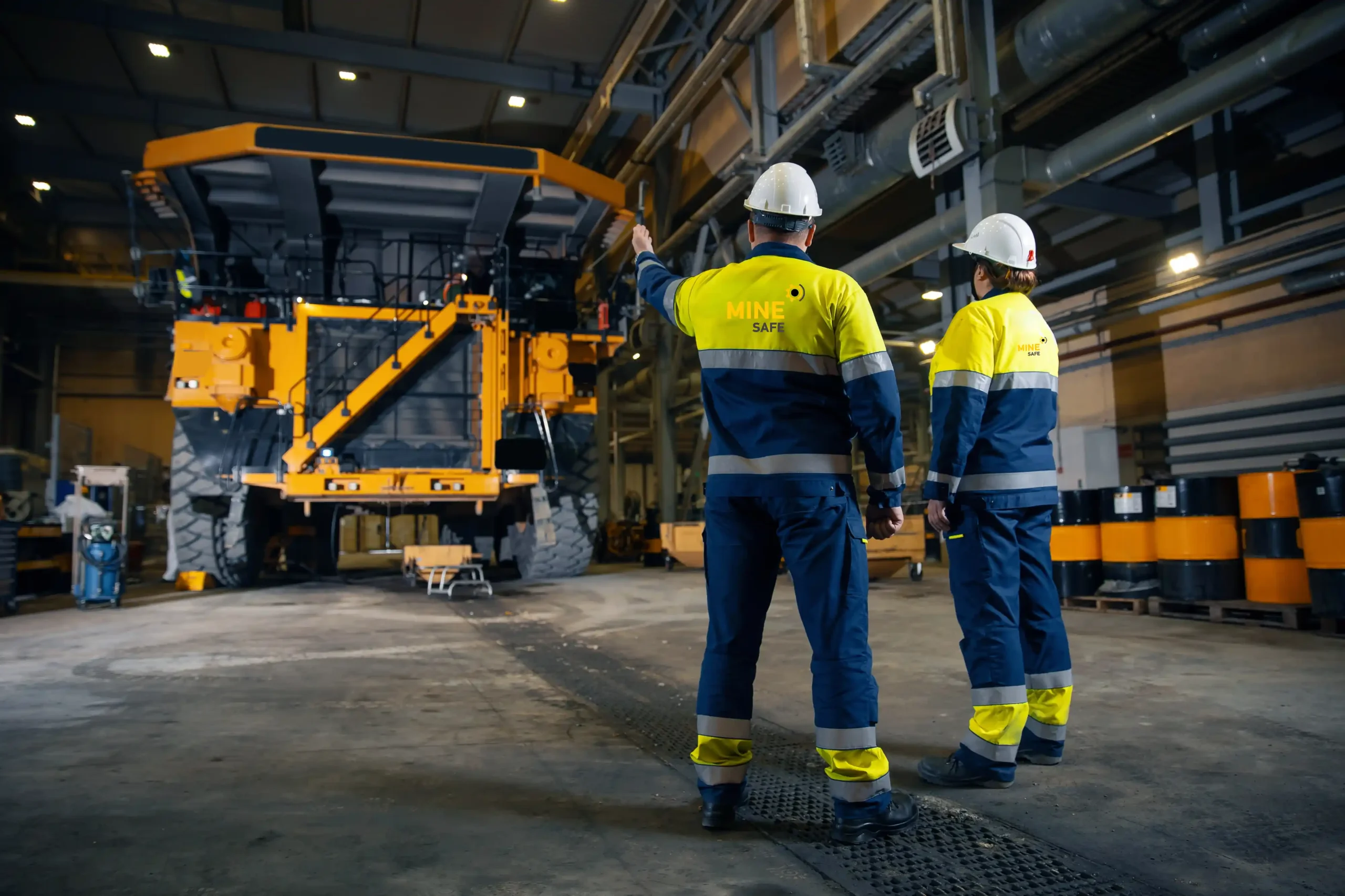
No. Autonomous haul trucks change vehicle interaction risk, but they do not remove it. On most mine sites, autonomous trucks share the operation with manned haul trucks, graders, water carts, loaders, light vehicles, maintenance crews and contractors. Every one of those interactions still needs to be controlled.
Autonomous haulage is now operating at scale. Industry reporting in August 2026 cited company figures of more than 1,900 autonomous trucks shipped by CiDi across nearly 40 mines, more than 1,000 Komatsu FrontRunner trucks commissioned, and nearly 700 trucks reported for Caterpillar’s MineStar Command. In Brazil, Vale’s Salobo operation brought 19 autonomous Komatsu 930E trucks into service. (Skillings, August 2026; company-reported figures that are not directly comparable.)
The more autonomous trucks a mine runs, the more important a different question becomes:
How do you protect the people and manned machines that still share the site?
The Mixed-Fleet Reality
Very few operations switch from fully manned to fully autonomous overnight. Most move through a long transition in which autonomous and manned equipment work side by side.
The same August 2026 reporting describes autonomous trucks operating alongside manned haul trucks, graders, water carts, loaders, light vehicles and maintenance crews. It notes that collision systems in this environment need to detect people, vehicles, machinery and obstacles, recognise different vehicle classes, account for human driving behaviour, and warn or intervene when risk reaches a set threshold.
The push towards automation is also driven by safety. After the July 2025 accident at El Teniente, Codelco’s chairman said the aim was to “remove people from the front line and replace that work with remote-controlled and automated systems” (Bloomberg via Mining Weekly, October 2025). As automation grows, the remaining people on site work in a more complex traffic environment.
Autonomy changes who drives. It does not change who is at risk.
Where Manned and Autonomous Machines Interact
Interaction risk concentrates where the autonomous zone meets the rest of the operation.
Loading and Dumping Areas
Loaders, dozers and support equipment work close to autonomous trucks, often in tight spaces with frequent movement.
Maintenance and Refuelling
Maintenance crews, service vehicles and refuelling trucks need to enter and leave areas where autonomous equipment may operate.
Road Maintenance
Graders and water carts work on haul roads that autonomous trucks use, often during production.
Light Vehicles and Contractors
Supervisors, technicians, visitors and contractor vehicles move through the site and may be less familiar with autonomous operating rules.
Shift Change and Access Points
Entry gates, parking areas and crossing points concentrate people and vehicles at predictable times.
Transition Zones
Boundaries between autonomous and manned areas are where operating rules change, and where confusion can occur.
Protecting the Manned Side of the Fleet
Autonomous trucks carry their own perception and safety systems from the autonomy provider. The manned equipment, light vehicles and pedestrians around them need protection too.
The EMESRT vehicle interaction framework describes three technology levels that apply to manned machines:
- Level 7, operator awareness: the system detects nearby vehicles, equipment or people and alerts the operator.
- Level 8, advisory controls: the system prompts corrective action or, in appropriate configurations, de-rates the vehicle.
- Level 9, intervention controls: the system can slow, stop or inhibit machine movement when a hazardous interaction requires action.
In a mixed autonomous fleet, Level 9 intervention on manned machines matters because a missed warning near an autonomous truck can escalate quickly. Read our explainer on Level 7 vs Level 8 vs Level 9 for the full comparison.
Mine Safe Global’s Level 9 Collision Prevention System and MI Machine Controller Interface (MCI) are designed to bring intervention capability to manned machines across mixed OEM fleets, including older equipment, subject to technical assessment and validation. Our Level 7 visitor and pedestrian protection covers people and vehicles that only enter the operation occasionally.
Standards and Evidence for Mixed Fleets
ISO 21815 addresses collision warning and avoidance for earth-moving machinery and mobile underground mining machines, including the interface between the collision avoidance system and the machine. For mixed fleets, it provides a common reference for how detection and machine response should work together.
Independent evidence is becoming more important. In August 2026, Komatsu South Africa was reported to have reached Technology Readiness Level 4 (TRL4) for its collision prevention systems, after testing by the University of Pretoria (Skillings, August 2026). Buyers increasingly expect suppliers to show what was tested, at what scope, and how it applies to their own machines.
Interoperability between a collision avoidance system and a specific autonomous haulage system must be confirmed with both suppliers and validated on site. It should never be assumed.
Questions to Ask Before an Autonomous Rollout
- Which manned machines, light vehicles and pedestrians will interact with autonomous trucks, and where?
- What collision avoidance level do those manned machines currently have: Level 7, 8 or 9?
- How will autonomous trucks and manned vehicles detect each other, and what happens if one system is unavailable?
- How are contractors, visitors and occasional site users identified and protected?
- Which systems will need to exchange data, and who is responsible for validating that integration?
- How will alarms be managed so operators trust the system instead of ignoring it?
- What independent test evidence can each supplier provide, and what does it actually cover?
A Checklist for the Transition Period
| Phase | Focus | Collision avoidance question |
|---|---|---|
| Before rollout | Map interactions | Where will manned and autonomous equipment meet, and what protection does each manned machine have today? |
| Pilot | Define zones and rules | Are transition zones, access control and site rules clear before autonomous trucks enter production? |
| Integration | Machine response | Can manned machines be upgraded to Level 9 intervention, and has each integration been validated? |
| Scale-up | Performance review | Are alarms, near misses and system availability reviewed regularly, and are controls adjusted? |
| Steady state | New equipment | Is every new manned machine or contractor vehicle assessed against the site’s collision prevention requirements? |
Frequently Asked Questions
Do autonomous haul trucks remove the need for collision avoidance?
No. Autonomous trucks usually share the site with manned haul trucks, graders, water carts, loaders, light vehicles, maintenance crews and contractors. Those interactions still need collision avoidance and other vehicle interaction controls.
What is a mixed autonomous fleet in mining?
It is an operation where autonomous equipment and manned equipment work on the same site, often during a long transition from manned to autonomous haulage.
Which EMESRT level is needed on manned machines in a mixed fleet?
That depends on the site’s risk assessment. Level 7 alerts the operator, Level 8 adds advisory controls, and Level 9 enables automatic intervention. Many operations aim for Level 9 because it can act even when a warning is missed.
How does ISO 21815 apply to mixed fleets?
ISO 21815 addresses collision warning and avoidance for earth-moving machinery and mobile underground mining machines, including the interface between the collision avoidance system and the machine. It gives a common reference for how detection and machine response should work together.
Can older manned machines in a mixed fleet be upgraded to Level 9?
In many cases, yes. Mine Safe Global’s MI Machine Controller Interface is designed to support integration with both modern OEM machines and older equipment, subject to technical assessment and validation.
Does Mine Safe Global integrate directly with autonomous haulage systems?
Interoperability with any specific autonomous haulage system must be assessed with both suppliers and validated on site. Contact Mine Safe Global to discuss your fleet and the systems involved.
Plan Your Mixed-Fleet Collision Prevention Strategy
Introducing autonomous haulage?
Running manned and autonomous equipment on the same site?
Mine Safe Global can help you assess how manned machines, light vehicles and pedestrians interact with your autonomous operation, and identify the right collision prevention level for each.
Request a mixed-fleet interaction assessment.
One Fleet. One Safety Standard. Mine Safe Global.
Last updated by Mine Safe Global